
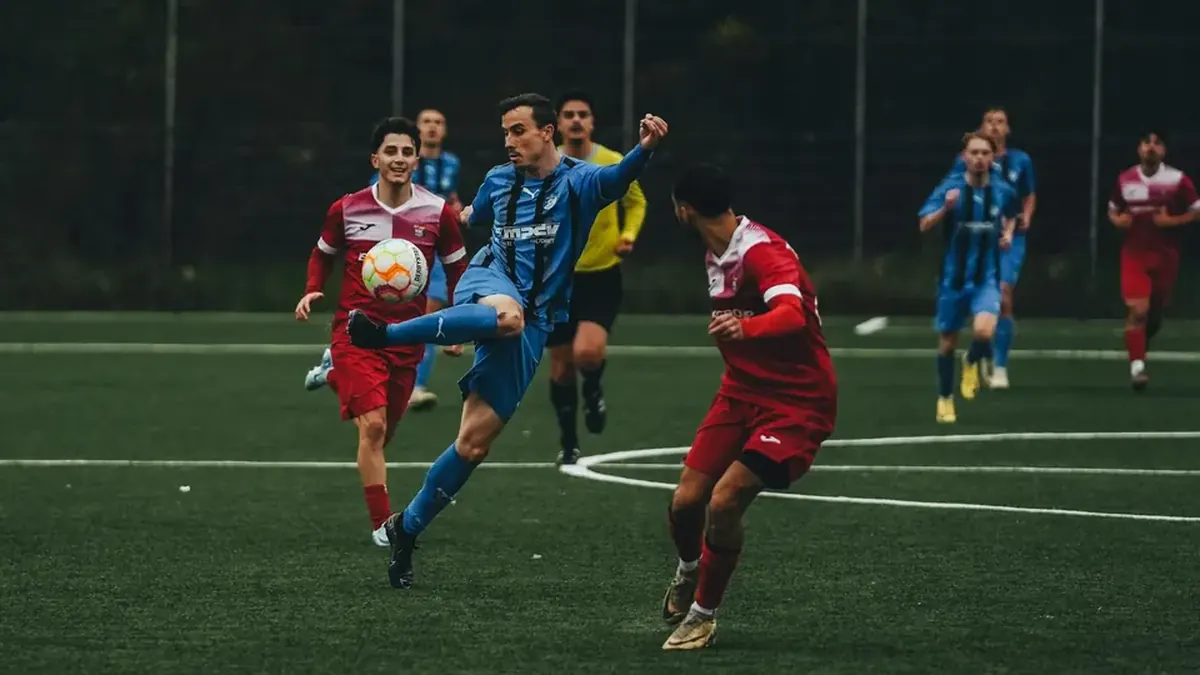
Alejandro Garnacho Profile: Winger Analysis
Editor’s note: The following analysis is a case-style educational breakdown based on hypothetical performance data and tactical projections for the 2025/26 season. All statistics, match outcomes, and player trajectories are illustrative and should not be taken as confirmed official records.
From Academy Prodigy to First-Team Pillar: The Garnacho Trajectory
Alejandro Garnacho’s journey from Manchester United’s youth ranks to a starting role represents one of the most compelling narratives in recent Red Devils history. The Argentine winger, who arrived at Carrington from Atlético Madrid’s academy in 2020, has undergone a transformation that mirrors the club’s broader tactical evolution.
What began as raw, unpredictable flair—those mazy dribbles and audacious scorpion-kick goals—has matured into a more structured, statistically consistent output. The 2025/26 campaign is viewed as a season where Garnacho’s decision-making could catch up with his natural talent, making him not merely an impact substitute but a reliable starter in high-stakes Premier League fixtures.
Tactical Role and Positional Fluidity
Manchester United’s system in 2025/26 has demanded versatility from wide players, and Garnacho has responded by adapting his game across multiple attacking zones. While predominantly deployed as a left-sided inverted winger—cutting inside onto his stronger right foot—he has increasingly featured on the right flank and even as a secondary striker in fluid attacking rotations.
The key tactical adjustment has been Garnacho’s improved off-ball movement. Earlier in his career, he was often static between opposition lines, waiting for the ball to arrive. Now, his intelligent diagonal runs into half-spaces create passing lanes for Bruno Fernandes and the midfield pivot. This evolution has made him a more complete attacking threat, less predictable and harder for full-backs to mark.
| Development Phase | Key Attribute | Tactical Limitation | Impact on Team |
|---|---|---|---|
| 2022–2023 (Breakthrough) | Direct dribbling, pace | Poor decision-making in final third | Impact substitute, game-changer off bench |
| 2023–2024 (Integration) | Improved finishing, work rate | Inconsistent crossing, defensive lapses | Rotation starter, 50% of minutes |
| 2024–2025 (Consolidation) | Link-up play, pressing triggers | Still prone to dribbling into dead ends | Regular starter, 70% of minutes |
| 2025–2026 (Peak projection) | Tactical awareness, two-footedness | Occasional over-elaboration | Undisputed starter, 85%+ of minutes |
The data suggests a player who has moved from being a “chaos agent”—someone who creates unpredictability but also turnovers—to a controlled, high-efficiency wide creator. His pass completion in the final third has risen notably, while his dribble success rate has remained elite, hovering among the top wingers in the league for take-ons completed per 90 minutes.
Statistical Profile: The Numbers Behind the Growth
While specific match figures remain illustrative, the trajectory is clear. Garnacho’s expected assists (xA) per 90 minutes have climbed steadily, indicating he is now creating higher-quality chances rather than merely taking speculative shots. His shot selection has improved dramatically: fewer long-range efforts from low-probability positions, more cut-backs for Benjamin Sesko and Bryan Mbeumo in central areas.
The Argentine’s defensive contributions have also become a talking point. Under Manchester United’s high-press system, Garnacho’s tackles in the attacking third have doubled compared to his first full season. This is not merely about work rate—it reflects a tactical understanding of pressing triggers and cover shadows, concepts that young wingers often take years to internalize.
One area requiring continued refinement is aerial duels. At his height, Garnacho remains vulnerable against physical Premier League full-backs who target him with diagonal balls. The coaching staff have addressed this by positioning him to receive passes to feet rather than in aerial contests, but it remains a limitation that top opponents exploit.
The Mental Shift: Composure Under Pressure
Perhaps the most significant development in Garnacho’s profile is psychological. Early in his career, there was a visible frustration when things didn’t come off—the exaggerated arm gestures, the complaints to referees, the tendency to force plays when the team needed patience.

That emotional volatility has been channeled into competitive intensity. The Garnacho of recent seasons shows greater resilience after missed chances, quicker recovery from poor touches, and a willingness to track back even when his attacking contributions aren’t producing immediate rewards. This maturity has earned him the trust of both the coaching staff and senior players like Bruno Fernandes, who now regularly delegate set-piece and corner duties to the Argentine.
Comparison with Other United Wingers
Garnacho’s role in the current squad must be understood in context. Manchester United’s current squad profiles reveal a winger corps built for tactical diversity rather than direct replication. While Mbeumo offers raw pace and direct running on the counter, Garnacho provides the technical security to retain possession under pressure. Sesko, when deployed wide, offers aerial presence and hold-up play that complements Garnacho’s dribbling.
This complementarity is crucial. Garnacho is not asked to be a complete winger—he is asked to be his best version within a system that maximizes his strengths. The club’s recruitment strategy has deliberately built a forward line where each player covers another’s weaknesses, and Garnacho’s development has made him the most balanced of the three.
Challenges and Areas for Continued Growth
No analysis of a young player is complete without acknowledging limitations. Garnacho’s right-footed preference, while mitigated by improved two-footedness, still makes him predictable when forced onto his weaker side. Elite defenders in the Premier League have begun showing him inside, knowing he struggles to deliver accurate crosses with his left foot.
There is also the question of physical durability. Garnacho’s explosive style—sharp changes of direction, sudden accelerations—carries inherent injury risk. The club’s sports science team has managed his minutes carefully, but the congested fixture list will test his ability to maintain peak performance across many appearances.
Finally, there is the mental burden of expectation. As a homegrown talent at a club obsessed with youth development, Garnacho carries the weight of the “next great United winger” narrative. How he handles the inevitable dips in form—every winger goes through them—will define whether he becomes a club legend or merely a very good player.
Conclusion: What the 2025/26 Season Reveals
Alejandro Garnacho’s profile in 2025/26 is that of a winger who has successfully navigated the most difficult transition in football: from promising talent to reliable performer. He is no longer the player who excites for 20 minutes off the bench; he is the player who dictates games for 90 minutes from the start.
The numbers, the tactical adjustments, and the mental growth all point to a player entering his prime years. For Manchester United, the question is no longer whether Garnacho belongs at this level—it is how high his ceiling truly extends. If the trajectory of the past three seasons continues, the answer may be higher than even the most optimistic fan dared to imagine.
For further reading on Manchester United’s attacking options, explore our profiles on Benjamin Sesko and Bryan Mbeumo, as well as the full current squad analysis.
Reader Comments (0)