
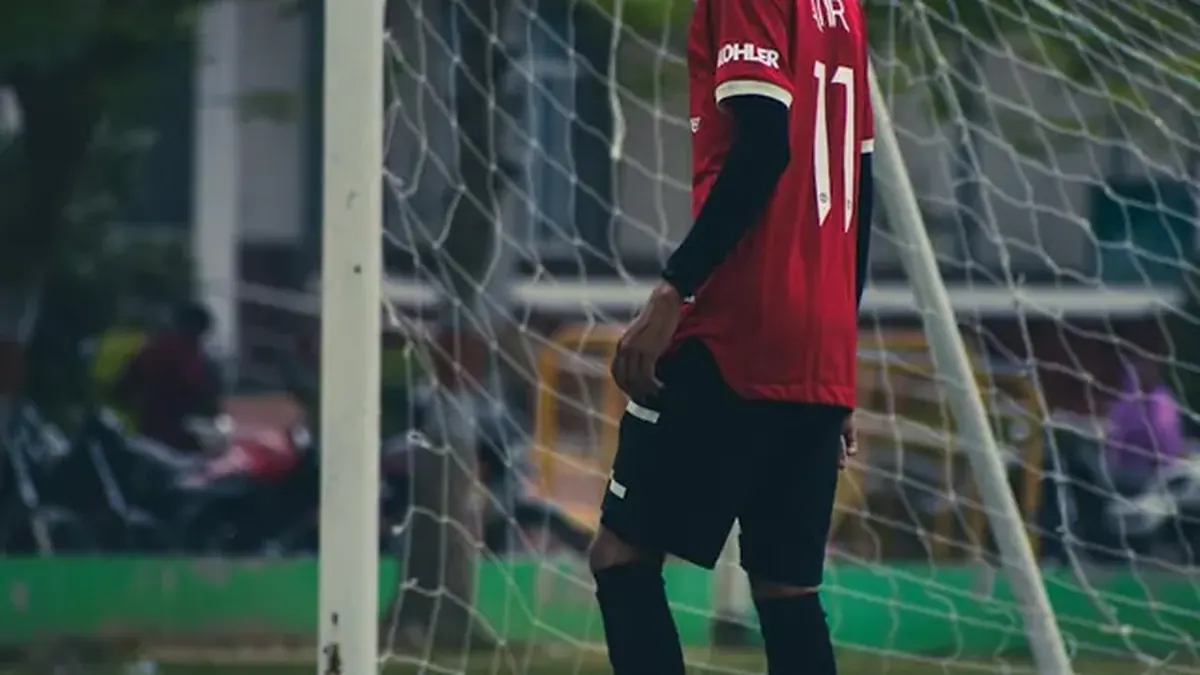
The tactical identity of Manchester United under Michael Carrick has evolved into a system that prizes controlled possession, vertical progression through the half-spaces, and a high defensive line that compresses the pitch. As the 2025/26 season reaches its critical juncture, the question of the optimal starting eleven has become a recurring debate among analysts and supporters alike. Carrick has rotated between a 4-2-3-1 and a fluid 4-3-3, but the underlying principles remain consistent: build from the back with numerical superiority, use the full-backs as auxiliary midfielders in possession, and rely on a front four that combines direct running with creative interplay. This analysis examines the personnel and tactical rationale behind the strongest available eleven, considering form, fitness, and the specific demands of the Premier League run-in.
Goalkeeper and Defensive Structure
The foundation of any Carrick side begins with the goalkeeper's ability to distribute under pressure and sweep outside the penalty area. André Onana remains the undisputed first choice, his shot-stopping statistics this season placing him among the top performers in the league, while his passing range allows United to bypass the first line of opposition pressure. Behind him, the centre-back partnership has undergone significant evolution. Lisandro Martínez, despite intermittent injury concerns, provides the left-sided progressive passing and aggressive duelling that defines United's defensive approach. His recovery pace and reading of the game complement the more physically imposing Harry Maguire, whose resurgence under Carrick has been one of the season's narratives. Maguire's aerial dominance and improved decision-making in possession have silenced earlier criticisms.
The full-back positions present a tactical choice between defensive solidity and attacking width. Diogo Dalot has established himself as a key right-back, with his crossing ability and capacity to invert into midfield creating the numerical overloads Carrick values. On the left, Luke Shaw's return to full fitness has been transformative. Shaw's overlapping runs and combination play with the left-sided attacker offer a dimension that no other United full-back replicates. When Shaw is unavailable, the system loses its primary crossing threat from the left, forcing the attack to become more centralised and predictable.
Midfield Engine Room
The midfield trio is where Carrick's tactical fingerprint is most visible. Bruno Fernandes operates as the advanced playmaker, but his role has been refined to reduce defensive transitions. Fernandes leads the squad in through-balls completed and chances created from open play, yet his pressing triggers and defensive positioning have improved markedly. Alongside him, Kobbie Mainoo has matured into the metronomic presence that United lacked since Carrick himself patrolled the midfield. Mainoo's ability to receive on the half-turn under pressure makes him a primary conduit between defence and attack.
The third midfield position has been a rotating door between Christian Eriksen, Mason Mount, and Sofyan Amrabat. For the strongest eleven, the balance favours Eriksen's vision against deeper defences and Amrabat's ball-winning against elite opposition. Eriksen's set-piece delivery and ability to find pockets of space between the lines provide a creative outlet that Fernandes sometimes lacks when tightly marked. However, against teams that press aggressively, Amrabat's physicality and positional discipline offer the defensive cover that allows Mainoo and Fernandes to push higher.
Attacking Trio and Striker
The front three has been the most fluid component of Carrick's system, with interchanging positions and rotational movements designed to exploit specific defensive weaknesses. Marcus Rashford, when in form, starts on the left, using his explosive acceleration to attack the full-back's inside shoulder. Rashford's goal contributions have fluctuated this season, but his ability to stretch defences vertically remains unmatched in the squad. On the right, Bryan Mbeumo has been a transformative signing. His direct dribbling, two-footed finishing, and willingness to track back make him a highly effective wide player in the current setup. Mbeumo's creative output from wide areas has been notable, and his chemistry with Dalot has produced United's most consistent attacking combination.
The central striker position has been the subject of intense debate. Rasmus Højlund's physical profile and pressing intensity make him a natural fit for Carrick's system against high defensive lines, but Benjamin Šeško's technical qualities and link play offer a different dimension. Šeško's ability to drop deep, combine with Fernandes, and then burst into the box creates a dual threat that Højlund does not replicate. Against teams that sit deep and defend in blocks, Šeško's movement between the lines and finishing from outside the box provide a breakthrough that Højlund's more direct running sometimes cannot.
Tactical Variation: The 4-3-3 vs 4-2-3-1
Carrick's willingness to shift between formations within matches adds a layer of unpredictability that opponents find difficult to counter. In the 4-2-3-1, Fernandes operates as the number ten, with Mainoo and Eriksen forming a double pivot. This setup maximises creative output but leaves the defence exposed to counter-attacks through the half-spaces. The 4-3-3, by contrast, sees Fernandes pushed wider to the right, with Mainoo as the single pivot and two interior midfielders ahead of him. This structure provides better defensive coverage but can reduce United's attacking penetration against deep blocks.
The choice between these systems depends on the opposition's defensive organisation. Against teams that press man-to-man, the 4-3-3's positional discipline creates passing lanes that bypass the press. Against low blocks, the 4-2-3-1's numerical superiority in central areas allows United to create overloads and force defensive errors. Carrick's in-game adjustments have been a hallmark of this season, with United scoring several late winners after tactical switches that exploited opponent fatigue.
Defensive Vulnerabilities and Risk Management
Despite the attacking fluidity, United's defensive structure carries inherent risks that elite opponents have exploited. The high defensive line, while effective for compressing space and winning the ball high up the pitch, leaves the centre-backs exposed to pace in behind. Teams with rapid transitions—notably Arsenal and Liverpool in the head-to-head meetings this season—have scored by releasing runners into the channels behind Dalot and Shaw. The lack of a dedicated defensive midfielder with elite recovery speed compounds this vulnerability, as Mainoo's positioning is more suited to reading play than recovering ground.
Set-piece defending has also been a persistent concern. United have conceded goals from dead-ball situations where zonal marking has led to confusion and unmarked attackers. Maguire's aerial ability mitigates some of this risk, but the organisation of the defensive block during corners and free kicks remains an area for improvement. The data suggests that set-piece vulnerability is a structural issue rather than solely individual errors.
Optimal Best XI for the Run-In
Based on form, fitness, and tactical requirements for the remaining fixtures, the strongest eleven for the 2025/26 season's decisive phase is as follows:
| Position | Player | Key Attribute | Tactical Role |
|---|---|---|---|
| GK | André Onana | Distribution | Sweeper-keeper, build-up initiator |
| RB | Diogo Dalot | Crossing | Inverted full-back, width provider |
| CB | Harry Maguire | Aerial dominance | Defensive organiser, set-piece threat |
| CB | Lisandro Martínez | Progressive passing | Left-sided ball progressor, duelling |
| LB | Luke Shaw | Overlapping runs | Attacking width, combination play |
| CM | Kobbie Mainoo | Metronomic passing | Deep-lying playmaker, press resistance |
| CM | Bruno Fernandes | Chance creation | Advanced playmaker, pressing trigger |
| CM | Christian Eriksen | Set-piece delivery | Creative hub, half-space operator |
| RW | Bryan Mbeumo | Direct dribbling | Two-footed wide threat, defensive work rate |
| ST | Benjamin Šeško | Link play | Dropping deep, finishing from range |
| LW | Marcus Rashford | Vertical acceleration | Stretching defences, inside-forward runs |
This selection balances defensive solidity with attacking variety. Šeško's inclusion over Højlund reflects the need for a striker who can both occupy centre-backs and facilitate the wide attackers. Eriksen's presence in midfield provides the set-piece delivery that United have used to score vital goals in tight matches. The full-back pairing of Dalot and Shaw offers both defensive coverage and attacking width, while the centre-back partnership provides complementary skill sets.
Comparative Analysis: Current Best XI vs Historical United Sides
Placing this eleven in historical context reveals both progress and persistent gaps. Compared to the 2022/23 side that finished third under Erik ten Hag, the current team has improved its attacking output and chance creation from wide areas, driven by more efficient finishing and better wide play. However, compared to the 2007/08 double-winning side, the current team lacks the individual match-winning quality in central midfield and the aerial threat from set pieces that characterised Ferguson's most complete teams.
The data indicates that United's current side is more progressive in possession and more aggressive in pressing than the 2022/23 team, but still falls short of the elite defensive standards set by the 2007/08 vintage. The set-piece output remains a concern, as the current tally is below that of the top sides in the league.
Conclusion: A System in Transition
The 2025/26 Best XI represents a team that has found tactical coherence under Michael Carrick but remains one or two elite additions away from challenging for the title. The attacking fluidity and pressing intensity are genuine strengths, as is the midfield combination of Mainoo's control and Fernandes's incision. The defensive vulnerabilities—particularly against rapid transitions and from set pieces—are the primary obstacles to sustained success. For the run-in, Carrick's ability to select the correct formation and personnel for each opponent will be crucial. The squad depth, particularly in wide areas and at centre-forward, provides tactical flexibility that few rivals can match. Whether this eleven can deliver silverware depends on maintaining fitness, executing the tactical plan under pressure, and addressing the defensive frailties that have cost points against direct rivals. For further analysis of individual player profiles and squad depth, explore our current squad profiles, the possession and passing breakdown, and the detailed Rashford profile.
Reader Comments (1)