The Modern Manchester Derby: City's Rise and United's Response (2008-Present)
The Manchester derby, a fixture dating back to 1881, underwent a seismic shift in the 21st century. The period from 2008 to the present represents a dramatic reversal of fortunes, transforming a historically one-sided rivalry into the Premier League's most significant modern power struggle. This era is defined by Manchester City's unprecedented financial rise and sporting dominance, juxtaposed against Manchester United's turbulent post-Ferguson search for identity and stability. The narrative is no longer just about local bragging rights, but about the soul of English football's modern era.
The Catalyst: A Blue Moon Rising (2008-2013)
The modern derby epoch was ignited in September 2008 when the Abu Dhabi United Group purchased Manchester City. This moment instantly altered the financial and competitive landscape of Manchester and the entire Premier League. While United were reigning European and English champions under Sir Alex Ferguson, a new, financially boundless challenger emerged just miles away. The initial years saw United maintain their supremacy, famously winning a dramatic 4-3 in 2009 with Michael Owen's stoppage-time winner, and a pivotal 2-1 League Cup semi-final victory in 2010 on the way to a trophy. However, the power shift became undeniable with City's 6-1 demolition of United at Old Trafford in October 2011—a result that shocked football and announced City as a genuine title force. The defining moment of this phase came in the 2011-12 season's climax. With the title on the line, City's last-gasp 1-0 victory over United, sealed by Vincent Kompany's header, handed them a crucial advantage they would not relinquish, pipping their rivals on goal difference in the most dramatic finale imaginable.
Ferguson's Final Act and the End of an Era
Sir Alex Ferguson's final season in 2012-13 was a masterclass in defiance. United reclaimed the Premier League title at a canter, finishing 11 points clear of a frustrated City. This included a thrilling 3-2 comeback win at the Etihad in December 2012, a testament to Ferguson's psychological edge. His retirement in 2013, however, marked a cliff edge. The stability, identity, and relentless winning mentality that had defined United for a generation—a legacy built from the post-war rebuilding through to the 1990s dynasty—was suddenly gone. The club entered a period of uncertainty just as City's project was hitting its strategic stride under executives like Txiki Begiristain and Ferran Soriano.
The Power Shift: City's Dominance and United's Identity Crisis (2013-2021)
This period saw the rivalry's dynamic solidify into a pattern of City's sustained excellence versus United's cyclical instability. Under managers Manuel Pellegrini and, decisively, Pep Guardiola from 2016, City established a clear footballing philosophy centered on possession dominance, high pressing, and systematic recruitment. They accumulated Premier League titles with record points tallies (100 in 2017-18, 98 in 2018-19), playing a brand of football that set a new benchmark.
Conversely, United cycled through multiple managerial visions: the pragmatic David Moyes, the possession-oriented Louis van Gaal, the trophy-focused Jose Mourinho, and the nostalgic Ole Gunnar Solskjær. While there were fleeting highs—such as Mourinho's 2017-18 season where United finished second and beat City 3-2 at the Etihad, delaying their title celebration—they were exceptions. Derby defeats became frequent and often emphatic, including a 4-1 loss at the Etihad in 2013 and a 3-1 defeat in the 2020 Carabao Cup semi-final. The gap was not just in points, but in cohesive vision. United's struggles were a stark contrast to the global commercial powerhouse they had become, a status detailed in our analysis of the club's global brand evolution.
Key Battlegrounds: Transfers and Tactics
The derby rivalry extended beyond the pitch to the transfer market and tactical duels. Both clubs competed for signatures, with United often paying premium fees without a coherent strategic fit, while City's recruitment appeared more targeted to their system. Tactically, Guardiola's City frequently exposed United's structural weaknesses, particularly in midfield and in playing out from the back. United's victories in this period, like Solskjær's counter-attacking masterclass in a 2-0 win at the Etihad in 2019-20, were typically based on defensive resilience and rapid transitions, highlighting a reactive rather than proactive approach.
The Current Landscape: A New Chapter of Competition? (2021-Present)
The appointment of Erik ten Hag as United manager in 2022 signaled another attempt to instil a defined philosophy. An early hallmark of his tenure was a dramatic 2-1 comeback win against City at Old Trafford in January 2023, fueled by a shift in mentality. The 2023 FA Cup final, where United's 2-1 victory denied City a domestic double, further proved that on their day, Ten Hag's side could compete. However, City's overarching dominance continued, exemplified by their historic Treble in 2022-23 and a 3-0 league win at Old Trafford in October 2022. The current dynamic remains one of a still-dominant City facing a United team in a longer-term rebuilding project, seeking to bridge a gap that is as much structural and cultural as it is purely sporting.
Legacy and Lasting Impact on the Rivalry
The modern Manchester derby has fundamentally rewritten the history of English football. What was once a footnote in United's trophy-laden calendar is now the fixture that often defines a season. The rivalry has produced iconic moments that resonate globally, from the "Aguerooo" moment to Kompany's thunderous strike in 2019. It has driven both clubs to unprecedented commercial and sporting heights, while also exposing the different models of modern football ownership and management. For United, the challenge is no longer just about beating their neighbors; it is about reconstructing a sustainable footballing project that can consistently challenge a well-oiled machine, a task reminiscent of the club's historic periods of rebuilding and resurgence.
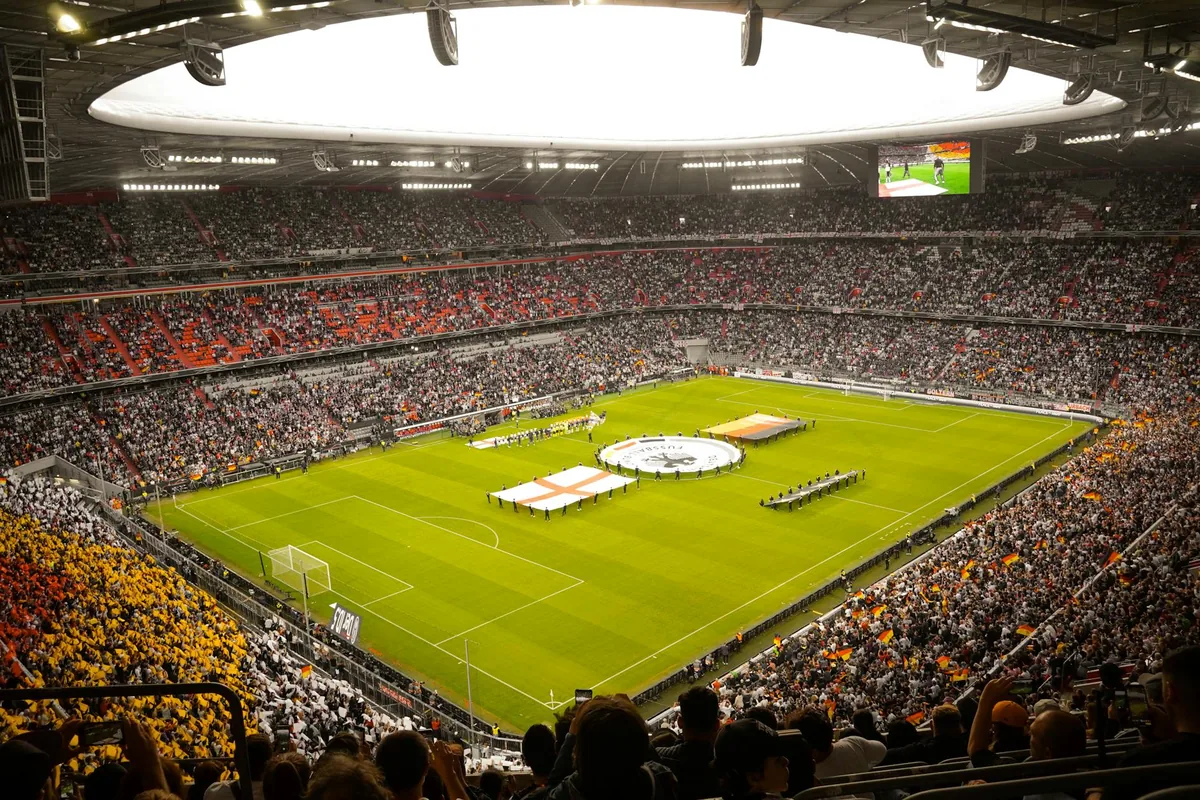
The intensity is captured perfectly by the atmosphere at Old Trafford on derby day, where the stakes feel higher than ever. As noted by the Premier League's official historical archive, the Manchester derby is now consistently among the most-watched fixtures worldwide, a testament to its transformed status.
As both clubs look to the future, the modern derby stands as a compelling story of contrasting trajectories: one of calculated construction and the other of navigating a post-empire landscape. The next decade will determine if this era becomes known as the beginning of sustained blue dominance or merely a dramatic chapter in the eternal red quest for restoration.