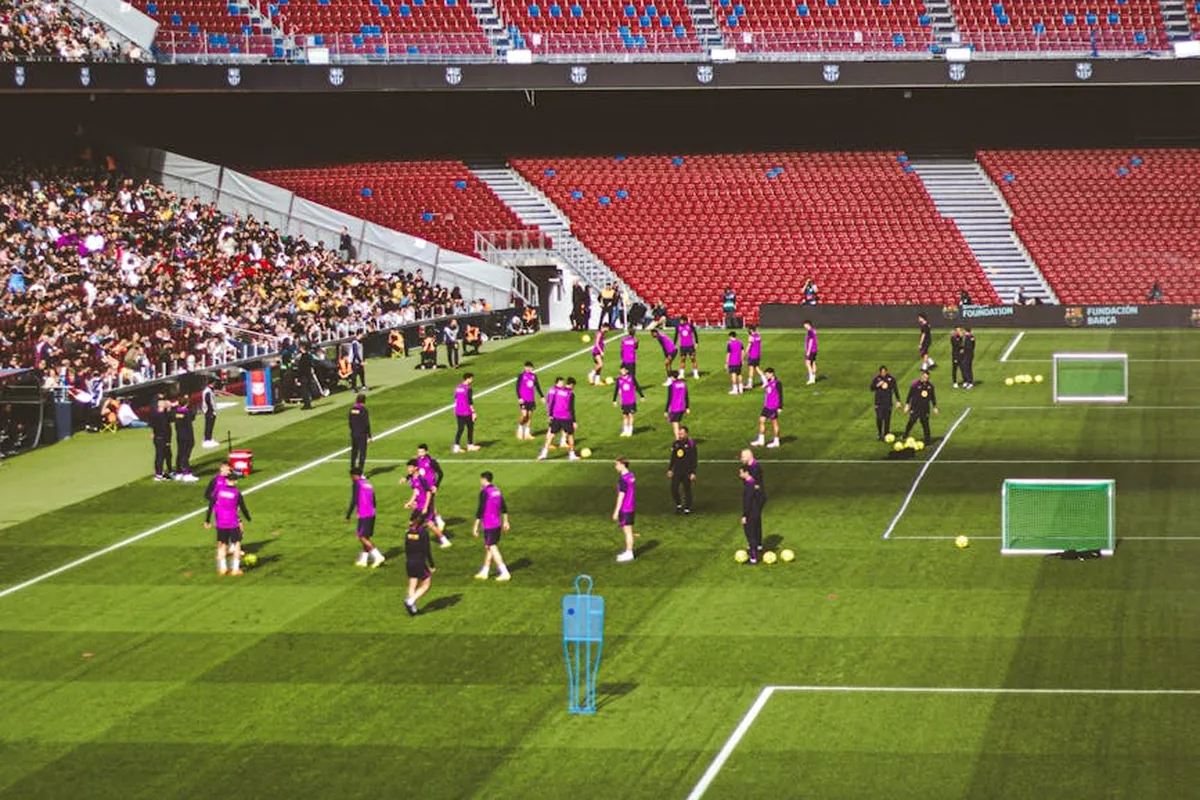
Manchester United Midfield Dynamics: 2024 Tactical Breakdown and Analysis
The midfield is the engine room of any successful football team, and for Manchester United in 2024, it represents both a critical area of tactical evolution and a point of intense scrutiny. Under the current management, the team's approach has shifted, demanding specific profiles and skill sets from its central players. This analysis breaks down the key components, partnerships, and tactical functions that define United's midfield as they navigate the challenges of the modern game, aiming to recapture the dominance once exemplified by legendary figures like Paul Scholes and Roy Keane.
The Foundational System: Shape and Philosophy
Manchester United's primary tactical setup in 2024 often revolves around a 4-2-3-1 formation, with the double pivot in central midfield serving as its strategic core. This system is designed to provide defensive stability while enabling fluid transitions into attack. The philosophy emphasizes controlled possession in deeper areas, quick vertical passing to bypass opposition presses, and rapid counter-attacks—a hallmark of the club's identity that dates back to its most celebrated eras, including The 1990s Dynasty. The specific demands on each midfield role, however, have evolved with the tactical trends of the Premier League.
The Deep-Lying Playmaker Role
One of the most crucial positions in the current setup is the deep-lying playmaker. This player is tasked with receiving the ball from the center-backs, dictating the tempo, and breaking lines with incisive passing. Their ability to operate under pressure and switch play is paramount. In 2024, this role requires not just technical passing range but also significant defensive awareness to shield the back four, a dual responsibility that defines the modern number '6'.
The Box-to-Box Dynamo
Partnering the deep-lying playmaker is typically a box-to-box midfielder. This player's energy and dynamism are essential for providing balance. Their responsibilities are vast: breaking up opposition play, carrying the ball forward through the middle third, making late runs into the penalty area, and providing defensive cover in wide areas. The effectiveness of the entire midfield structure often hinges on the physical output and tactical intelligence of this player.
Key Personnel and Emerging Partnerships
The effectiveness of any tactical system depends on the players executing it. United's 2024 midfield features a blend of established stars and developing talents, each bringing distinct attributes to the engine room.
Bruno Fernandes remains the undisputed creative hub, operating most effectively as the advanced playmaker in the '10' role. His role is less about traditional midfield control and more about chance creation, risk-taking passes, and providing a consistent goal threat. For a detailed statistical breakdown of his influence, see our Bruno Fernandes: Complete Statistical Analysis.
Behind him, the double-pivot combinations are critical. The partnership between a player like Kobbie Mainoo—whose breakthrough has offered composure and progressive ball-carrying—and a more defensively-oriented anchor like Casemiro has been explored. This blend seeks to combine youthful fearlessness with veteran game-management. Another key dynamic involves the use of Mason Mount, whose skill set allows for a more fluid, interchanging midfield three, pushing Fernandes into wider areas at times to create overloads.
Tactical Strengths and Identified Vulnerabilities
When functioning optimally, United's 2024 midfield excels in transitional moments. The ability to win the ball and immediately release forwards like Marcus Rashford is a clear strength. Furthermore, the technical quality of certain players allows the team to play through intense presses, a necessity against high-caliber Premier League opposition.
However, vulnerabilities persist. The space between the midfield and defensive lines can be exploited, especially when the pivot is bypassed or pulled out of position. This structural issue is often compounded by injuries, which have disrupted partnership continuity. Additionally, against teams that deploy a physical, compact midfield block, United can sometimes lack the guile or sustained positional rotation to create clear-cut chances, placing excessive creative burden on Fernandes.
Evolution from Past Systems
Understanding United's current midfield requires context from the club's rich history. The famed midfield partnerships of the past, such as Keane and Scholes or Scholes and Michael Carrick, were built on clear, complementary roles within the dominant systems of Sir Alex Ferguson's era. The 2024 approach shares the fundamental principle of balance but adapts to a faster, more physically demanding league. The classic 4-4-2 of the 1990s, with its wide midfielders providing chalk-on-the-boots width, has evolved into a system where full-backs provide width and midfielders must cover more intricate, multi-functional roles.
This evolution mirrors the club's broader journey of adaptation, reminiscent of the strategic rebuilds undertaken in different decades, such as the Post-War Rebuilding period under Sir Matt Busby. Today's challenge is constructing a midfield capable of sustaining a title challenge in an era of unprecedented tactical complexity and financial competition.
The Road Ahead: Strategic Needs and Development
Looking forward, the continued development of young talents like Mainoo is paramount for long-term stability. The club's strategy likely involves integrating these academy products with strategic signings that address specific profile gaps, such as a physically dominant, mobile defensive midfielder or a creative '8' with greater goal output from deep.
The success of this project will be measured by the midfield's ability to control games against elite opponents—a benchmark set by the club's historical standards. For further insight into how the current squad is shaping up across all positions, explore our Current Manchester United Squad: Complete Player Guide.
As tactics continue to evolve, resources like the The Analyst provide excellent data-driven breakdowns of midfield performance across European football. Furthermore, understanding the broader philosophical trends can be enhanced by studying materials from coaching organizations like UEFA, which often publish technical reports on the evolution of playing styles.
In conclusion, Manchester United's 2024 midfield is a work in progress, showcasing moments of high-potential synergy alongside clear areas for improvement. Its tactical breakdown reveals a unit striving to balance defensive solidity with creative verve, seeking to forge an identity powerful enough to propel the club back to the summit of English and European football.