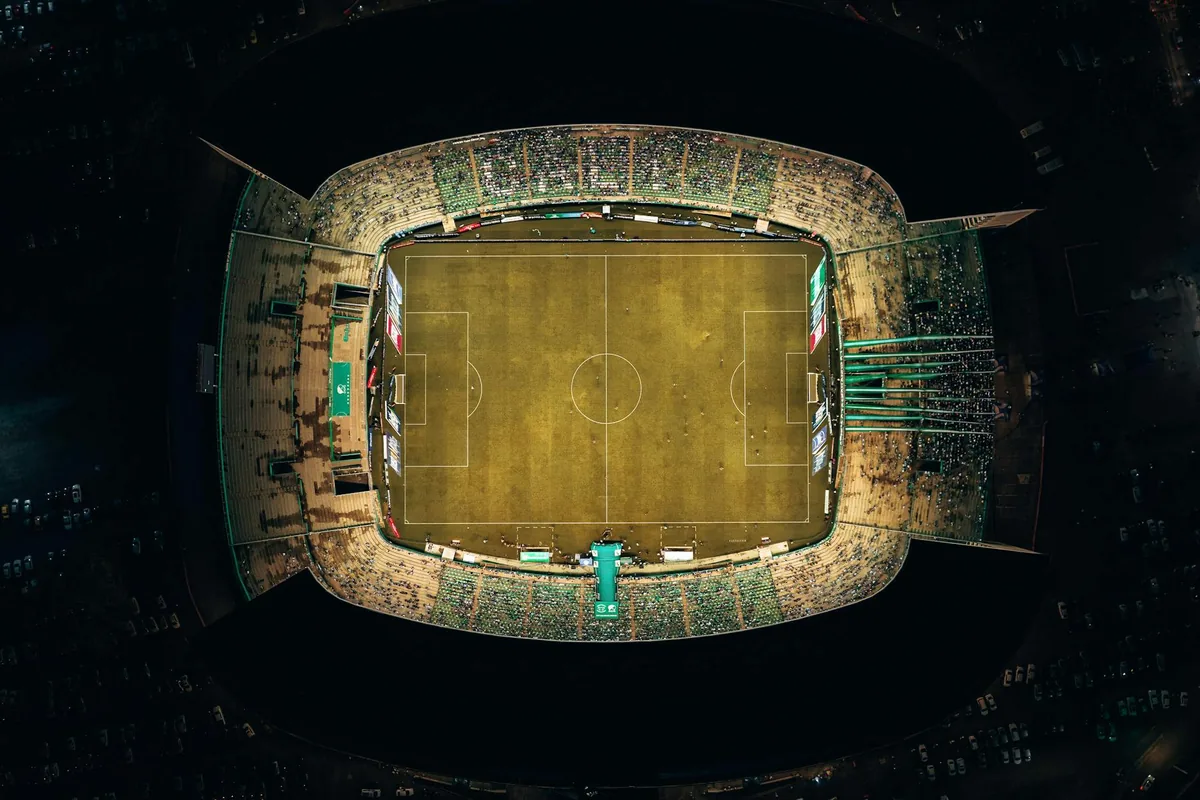
Manchester United vs Real Madrid: A Champions League Rivalry History
The rivalry between Manchester United and Real Madrid is one of European football's most storied and glamorous contests. While not defined by domestic proximity, their clashes on the continent's grandest stage have produced legendary matches, iconic moments, and a narrative woven with tragedy, genius, and dramatic transfers. This is a history of two footballing superpowers whose paths have crossed at pivotal moments, shaping the legacy of the Champions League itself.
The Foundation: Tragedy and the First Encounters (1957-1968)
The genesis of this rivalry is inextricably linked to the most tragic chapter in Manchester United's history. The first competitive meetings occurred in the 1956-57 European Cup semi-finals, pitting Sir Matt Busby's visionary Busby Babes against the mighty Real Madrid of Alfredo Di Stéfano and Francisco Gento. A thrilling 2-2 draw at a packed Old Trafford showcased English football's emerging potential, but a 3-1 defeat in Madrid sent the Spanish giants to the final. The promise of that young United side was catastrophically cut short in the Munich Air Disaster the following February.
Real Madrid's gesture of offering their European Crown to United in the wake of the tragedy was a profound moment of sportsmanship. The clubs would not meet again for over a decade, by which time Busby had rebuilt his team. Their 1968 European Cup semi-final clash was symbolic of United's redemption. A 1-0 aggregate victory, sealed by a Bill Foulkes goal at the Bernabéu, propelled United to Wembley and their historic first European Cup triumph in 1968, a victory deeply connected to that first, fateful encounter.
The Quarter-Century Hiatus and the Galáctico Spark
For 32 years, these European giants did not meet in competition. Their trajectories diverged, with United dominating domestically under Sir Alex Ferguson and Real Madrid building their 'Galácticos' project. The rivalry was reignited in the 1999-2000 Champions League quarter-finals, a tie that marked a passing of the torch. Despite a stunning 0-0 draw at the Bernabéu, United were outclassed 3-2 at Old Trafford by a Madrid side featuring Raúl and Fernando Redondo, who produced a mesmerizing performance. This defeat highlighted the gap United still needed to close to be Europe's best, a mission Ferguson would relentlessly pursue.
The Ronaldo Saga: The 2003 Champions League Epic
No single match encapsulates the drama of this rivalry more than the 2002-03 Champions League quarter-final second leg at Old Trafford. The tie was poised at 1-1, but the night belonged to one man: Ronaldo Nazário. The Brazilian phenomenon, playing for Madrid, scored a stunning hat-trick, receiving a standing ovation from the United faithful upon his substitution—a rare and classy acknowledgment of sheer brilliance. United won the match 4-3 but lost the tie 6-5 on aggregate. The spectacle was immense, but the aftermath was seismic. That performance is widely believed to have convinced a young Cristiano Ronaldo, then at Sporting CP, of his future destiny. Months later, he signed for Manchester United, beginning a journey that would inextricably link his legacy with both clubs.
Key Battles and Lasting Images
- The Goalkeeper Duel: Iker Casillas vs. Fabien Barthez in 2003 was a clash of styles and reflexes.
- Midfield Mastery: The 2000 tie saw Roy Keane battling the elegance of Fernando Redondo.
- The Ovations: The Bernabéu's tribute to the Busby Babes in 1957 and Old Trafford's for Ronaldo in 2003 are enduring images of mutual respect.
The Mourinho vs. Ferguson Chess Match (2013)
A decade later, the narrative had shifted. Cristiano Ronaldo was now the talisman for Real Madrid, managed by José Mourinho. They faced a United side in the 2012-13 Champions League Round of 16, led by an aging but determined Sir Alex Ferguson. The first leg at the Bernabéu ended 1-1, with United executing a disciplined tactical plan. The return leg at Old Trafford was a classic of tension and controversy. United took the lead through a Sergio Ramos own goal, but the match turned when Nani was controversially sent off. Mourinho's Madrid capitalized, with Luka Modrić and Ronaldo (who pointedly refused to celebrate) scoring to eliminate United. This tie represented the end of an era; it was Ferguson's final European match at Old Trafford, concluding a chapter of personal duels with Madrid that spanned his entire era of dominance.
Beyond the Pitch: A Rivalry of Commerce and Stars
The Manchester United-Real Madrid rivalry extends beyond 90 minutes. It is a clash of two of football's most powerful global brands, consistently vying for commercial supremacy and worldwide fan engagement. Most pointedly, it has been defined by transfer battles for the game's biggest stars. The pursuit and eventual world-record signing of Cristiano Ronaldo by Madrid in 2009 was a monumental moment, a direct transfer between the rivals that underscored Madrid's pulling power. Later sagas involving David de Gea and Gareth Bale further highlighted the intense competition in the market, making every encounter a multi-layered contest of prestige, history, and future ambition.
A Legacy of Mutual Respect and High Stakes
Unlike bitter local derbies, the Manchester United vs. Real Madrid rivalry is built on a foundation of profound respect, forged in tragedy and sustained by a shared commitment to attacking football and global appeal. Their matches are rarely just games; they are events that decide eras, influence transfers, and create legends. From the shadow of Munich to the brilliance of Ronaldo, their encounters have consistently delivered some of the Champions League's most memorable nights. For a deeper look at United's complete European journey, explore our guide to all their Champions League triumphs. As both clubs continue to chase European glory, the world awaits the next chapter in this storied continental rivalry. For official records and historical statistics of these epic clashes, authoritative sources like UEFA's official history hub provide comprehensive data.