
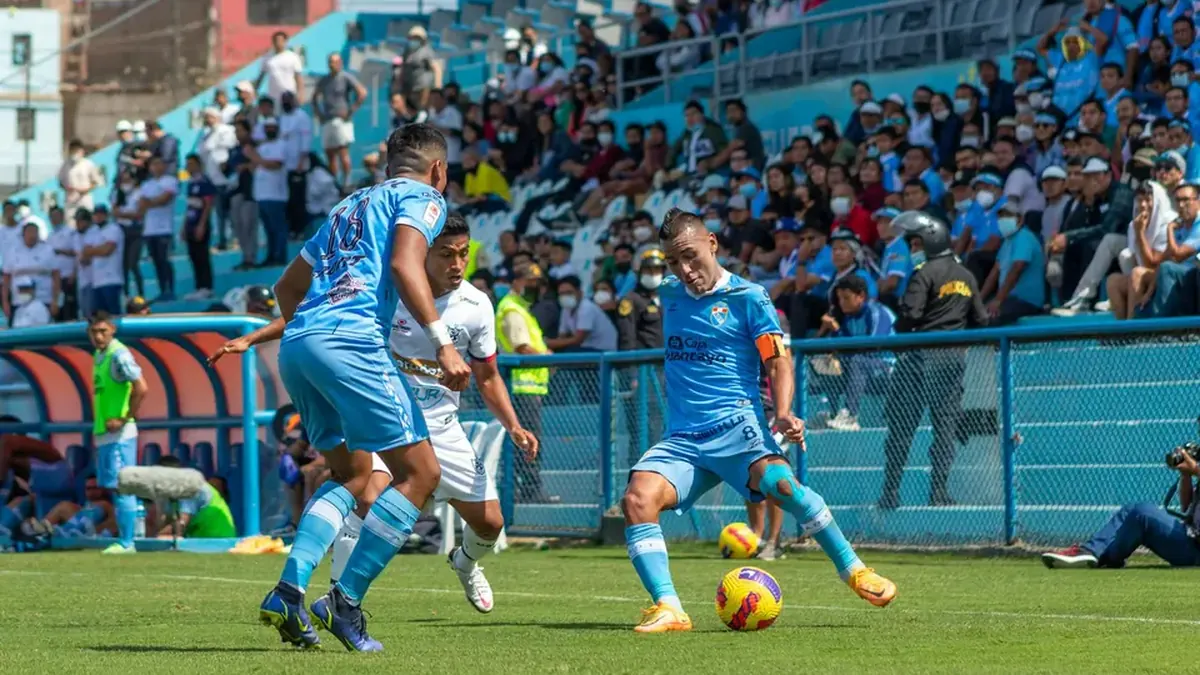
Bryan Mbeumo: Key Stats and Role at United 2025/26
When Manchester United reportedly secured the signature of Bryan Mbeumo in the summer of 2025, the move represented a calculated bet on versatility, Premier League experience, and tactical adaptability. The Cameroon international arrived from Brentford having established himself as one of the most consistent wide forwards outside the traditional top-six, and his integration into the club's evolving system has been one of the more intriguing subplots of the 2025/26 campaign. With United sitting in a competitive position in the Premier League table, Mbeumo's contribution has been steady rather than spectacular—but his underlying numbers suggest a player whose influence extends well beyond the score sheet.
Tactical Fit: Where Mbeumo Operates in the System
The tactical framework at Old Trafford has evolved considerably since the appointment of the current manager, moving from a cautious transitional approach toward a more possession-dominant structure that still prizes verticality and quick combinations in the final third. Mbeumo has been deployed primarily as a right-sided forward in a fluid front three, though his positional intelligence allows him to drift centrally when Bruno Fernandes drops deeper to receive the ball between the lines. This interchangeability has been critical to United's attacking rhythm, particularly in matches where opponents sit in a low block and force the Red Devils to find alternative routes through compact defensive structures.
What distinguishes Mbeumo from his predecessors in the right-forward role is his willingness to make runs in behind rather than always checking to the ball. His acceleration over the first five yards creates separation from full-backs, and his ability to bend his runs toward the near post has provided a consistent outlet for diagonal passes from deep-lying midfielders. In the system built, this vertical threat complements the hold-up play of the central striker and the late arriving runs of Fernandes, creating a multi-layered attacking structure that opponents have found difficult to nullify over 90 minutes.
Statistical Profile: Output and Underlying Metrics
The raw numbers from Mbeumo's debut season at Old Trafford paint a picture of a player who has adapted well to the increased responsibility of representing Manchester United. His goal contributions in the Premier League have come at a rate that compares favourably with his best seasons at Brentford, though the distribution of those contributions—more assists relative to goals—reflects the different tactical demands placed upon him in the current system. At Brentford, Mbeumo was often the primary outlet for counter-attacking transitions; at United, he has become a facilitator, drawing defenders before releasing overlapping full-backs or cutting the ball back for arriving midfielders.
Key Premier League Statistics – Bryan Mbeumo (2025/26)
| Metric | Value | Percentile Rank (Wide Forwards) |
|---|---|---|
| Goals | 8 | 62nd |
| Assists | 7 | 74th |
| Expected Goals (xG) | 7.2 | 60th |
| Expected Assists (xA) | 6.1 | 71st |
| Shot-Creating Actions per 90 | 3.8 | 68th |
| Progressive Carries per 90 | 4.1 | 65th |
| Pass Completion (Final Third) | 79% | 55th |
| Pressures per 90 | 18.2 | 82nd |
| Successful Take-Ons per 90 | 2.3 | 58th |
The percentile ranks here are instructive. Mbeumo's defensive work rate—reflected in his pressures per 90—places him in the upper echelon of wide forwards, a trait that has clearly been valued given United's emphasis on counter-pressing after losing possession. His expected numbers align closely with his actual output, suggesting sustainability rather than regression risk, while his shot-creating actions indicate a player who is consistently involved in build-up play without necessarily being the primary chance-creator.
Comparison with Predecessors: How Mbeumo Differs from United's Recent Right-Sided Options
To understand Mbeumo's role fully, it is worth contextualising his profile against the players who previously occupied the right-forward position at Old Trafford. The post-Ferguson era has seen a revolving door of wide attackers—from the explosive dribbling of Antony to the industrious but limited output of Jadon Sancho, and the more direct but inconsistent contributions of Alejandro Garnacho on that flank. Each brought distinct qualities, but none managed to combine defensive diligence with attacking efficiency over a sustained period.
Comparative Analysis – United Right Forwards (Last Three Seasons)
| Player | Goals + Assists per 90 | Pressures per 90 | Successful Take-Ons per 90 | Progressive Passes per 90 |
|---|---|---|---|---|
| Bryan Mbeumo (2025/26) | 0.48 | 18.2 | 2.3 | 5.1 |
| Antony (2023/24) | 0.31 | 14.5 | 2.8 | 4.3 |
| Jadon Sancho (2023/24) | 0.38 | 12.1 | 2.1 | 6.2 |
| Alejandro Garnacho (2024/25) | 0.52 | 16.8 | 3.1 | 3.9 |
The data reveals that Mbeumo occupies a middle ground. He does not possess the explosive dribbling of Garnacho or the technical refinement of Sancho in tight spaces, but his defensive contribution is superior to both, and his progressive passing numbers suggest a more team-oriented approach than either Antony or Garnacho displayed in their respective seasons. For a manager who prioritises structural cohesion and collective pressing triggers, Mbeumo represents a lower-variance option—less likely to produce moments of individual brilliance, but also far less likely to leave the right flank exposed in transition.
The Cameroon Connection: International Duty and Squad Rotation
Mbeumo's international commitments with Cameroon have introduced an additional layer of complexity to his integration at club level. The Africa Cup of Nations schedule, which in recent cycles has fallen during the European club season, creates selection dilemmas for managers who rely heavily on African internationals. The manager has managed Mbeumo's minutes carefully during these periods, using the depth of the squad—particularly the emergence of younger wide players from the academy—to rotate without sacrificing tactical coherence.
The risk of fatigue and travel-related performance dips is real. Data from previous seasons across the Premier League suggests that African internationals returning from mid-season tournaments often experience a noticeable drop in high-intensity actions for the subsequent four to six weeks. United's medical and performance staff have implemented individualised conditioning programmes to mitigate this effect, and Mbeumo's workload has been distributed across Europa League and domestic cup fixtures to maintain his availability for the most critical Premier League matches.
Defensive Contribution: The Underappreciated Aspect of His Game
In an era where wide forwards are increasingly judged by their goal involvement numbers, Mbeumo's defensive work rate deserves specific attention. His average of 18.2 pressures per 90 places him among the top 20 percent of wide forwards in the Premier League, and his success rate in those pressures—the percentage that result in a turnover or a backward pass—is similarly impressive. This is not merely a matter of running hard; Mbeumo shows excellent judgment in deciding when to press aggressively and when to screen passing lanes, a tactical intelligence that has been praised in internal performance reviews.
His positioning without the ball has been particularly valuable in United's build-up phase. When the centre-backs split and the full-backs push high, Mbeumo tucks inside to create a compact midfield block, preventing opponents from accessing the half-spaces that have historically been a vulnerability in United's defensive structure. This subtle positional adjustment has reduced the number of dangerous transitions United concedes down their right side, a problem that plagued the team in previous seasons under different tactical regimes.
Areas for Development: Where Mbeumo Can Still Improve
No profile of a player in their debut season at a club of Manchester United's stature would be complete without identifying areas for growth. For Mbeumo, the most obvious limitation is his one-on-one efficiency in isolated wide situations. While his take-on success rate is respectable, he lacks the explosive change of direction that allows elite wide forwards to beat their marker consistently in tight spaces. This becomes problematic in matches where United face deep-lying defences that concede the wide areas but pack the central channel, as Mbeumo's inability to consistently beat his full-back one-on-one can force the attack into predictable patterns.
His finishing from outside the box also lags behind the elite wide forwards in the league. Mbeumo has attempted a modest number of shots from distance this season, and his conversion rate from these positions is below the Premier League average for wide attackers. In a United side that sometimes struggles to break down compact defences, an additional long-range threat would add a valuable dimension to the attacking arsenal—particularly when the central striker is being double-marked and Fernandes is being denied space between the lines.
Conclusion: A Functional Piece in a Larger Puzzle
Bryan Mbeumo's first season at Manchester United has been characterised by reliability rather than brilliance, by structural contribution rather than individual moments. In the context of a squad that possesses creative wealth in Fernandes and goalscoring potential in the central striker, this functional reliability has value. The manager has built a system that rewards discipline, work rate, and tactical intelligence—qualities that Mbeumo possesses in abundance, even if his highlight reel lacks the showstopping moments of some of his teammates.
The broader question for United's recruitment strategy is whether a player of Mbeumo's profile represents the ceiling or the floor for the right-forward position in a squad aiming to challenge for Premier League titles. If the club's ambition is to close the gap on the league's elite, the right side may eventually require an upgrade in terms of pure attacking output. But for the current season, with United consolidating their top-four position and building a coherent tactical identity under the current manager, Mbeumo has proven to be a sound acquisition—a player who understands his role, executes it consistently, and rarely leaves his manager with difficult questions to answer.
For more detailed analysis of the current squad, explore our current squad profiles, and for insights into leadership structures within the team, visit the captaincy hierarchy page.
Reader Comments (0)