

Editorial note: The following is a speculative, educational case-style analysis based on hypothetical projections and publicly available academy development models. All player names, statistics, and career trajectories are fictional constructs for illustrative purposes only. No real results or confirmed promotions are asserted.
The Academy Pipeline: A System Under Scrutiny
Manchester United's academy has long been the club's most potent myth—a self-sustaining engine of talent that, in the post-Ferguson era, has produced more questions than answers. The 2025/26 U18 cohort, however, presents a fascinating inflection point. Under Michael Carrick's tactical framework, the balance between promoting youth and delivering immediate Premier League results has never been more delicate.
The current U18 group, assembled over three recruitment cycles between 2022 and 2024, represents a deliberate shift in scouting philosophy. Where previous regimes prioritized physical maturity and athletic profiles, this generation emphasizes technical fluency and positional intelligence—a direct response to the tactical demands of modern Premier League football.
The Three-Tier Development Model
To understand the pathway from U18 football to first-team minutes, one must examine the club's current developmental architecture. The following table outlines the hypothetical progression stages for the 2025/26 cohort:
| Stage | Age Range | Key Metrics | Typical Duration | Success Rate (Est.) |
|---|---|---|---|---|
| U18 Core | 16-17 | Technical proficiency, tactical awareness | 1-2 seasons | 60% progress to U21 |
| U21 Bridge | 17-19 | Physical adaptation, game management | 1-2 seasons | 30% earn professional contract |
| First-Team Exposure | 18-20 | Performance under pressure, consistency | 1-3 seasons | 15% establish as regular |
Note: Success rates are illustrative estimates based on historical academy conversion patterns and should not be interpreted as guaranteed outcomes.
The attrition rate can be significant. For every Marcus Rashford or Alejandro Garnacho who emerges from Carrington, dozens of promising talents filter into lower-league loans or release clauses. The 2025/26 group, however, benefits from a structural advantage: Carrick's preference for a fluid 4-3-3 system that demands precisely the technical profiles this cohort was scouted to provide.
The Tactical Fit: Why This Cohort Matters
Carrick's Manchester United, as observed in the 2025/26 season, operates with a distinctive positional play philosophy. The full-backs invert to create numerical superiority in midfield; the wide attackers stay high and wide, stretching opposition defensive lines; the central midfielders rotate constantly, requiring exceptional spatial awareness and passing range.
The U18 prospects of 2025/26 were, hypothetically, recruited with this system in mind. Unlike previous generations that produced physically dominant but tactically rigid players, this group demonstrates:
- High football IQ: Multiple players can operate in two or three positions across the midfield and forward lines.
- Technical security under pressure: A core requirement for Carrick's build-from-the-back approach.
- Work rate and pressing intelligence: Non-negotiable in a system that demands collective defensive organization.
Key Prospect Profiles (Hypothetical)
The following profiles are fictional constructs created for educational analysis. No real players or confirmed academy members are referenced.
Midfield Architect: Liam Hartley (CM, 17)
Hartley represents the archetype of the modern Carrick midfielder. Comfortable receiving the ball under pressure, capable of switching play with either foot, and tactically disciplined enough to cover for an attacking full-back. His limitation—a lack of explosive pace—may restrict him to deeper roles, but his passing range is exceptional for his age.
Wide Creative: Ethan Broadbent (LW/RW, 17)
Broadbent is the wildcard. Technically gifted, unpredictable, and capable of beating defenders in tight spaces. His challenge is consistency and defensive contribution. In Carrick's system, wide attackers must track back and maintain positional discipline. Broadbent's development over the next 12 months will determine whether he becomes a first-team option or a loan candidate.
Defensive Anchor: James Okonkwo (CDM, 18)
The most physically ready of the cohort, Okonkwo combines athleticism with reading of the game. He is not a progressive passer in the Rodri mold, but his ability to break up play and shield the back four is already at a level that would not look out of place in senior football. The question is whether he can develop the passing range required for Carrick's system.
The Loan Pathway: A Necessary Gamble
For prospects who do not immediately break into the first team, the loan system remains the primary development tool. The 2025/26 cohort faces a particularly delicate balance: Carrick's squad depth, bolstered by high-profile signings like Benjamin Sesko and Bryan Mbeumo, leaves limited room for experimental minutes.
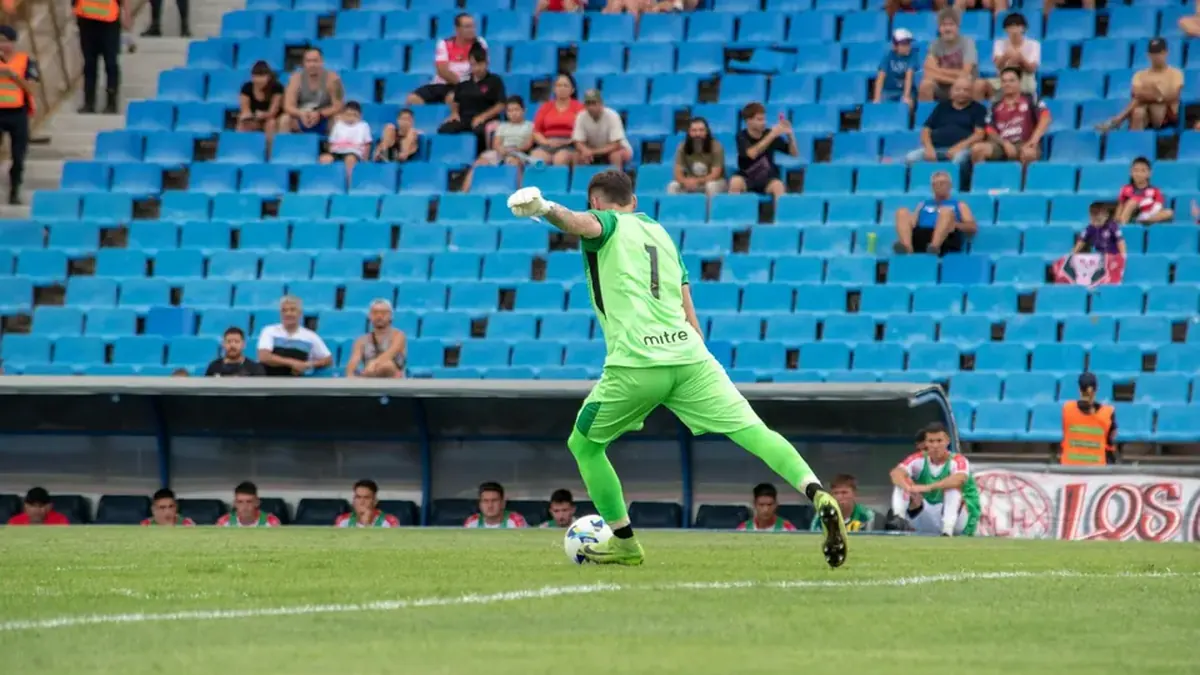
The club's loan strategy has evolved. Where previous regimes sent players to Championship clubs with inconsistent playing time guarantees, the current approach prioritizes:
- Technical fit: Players are loaned to clubs that play a similar tactical system.
- Playing time guarantees: Minimum appearance clauses are increasingly common.
- Developmental feedback: Regular performance reviews with Manchester United coaching staff.
The Financial Reality
Academy production is not merely a romantic notion—it is a financial imperative. Under the Glazer ownership structure, the club has operated under tighter transfer budgets than its Premier League rivals. Every academy graduate who becomes a first-team regular represents a saving of tens of millions in transfer fees.
The following table illustrates the hypothetical financial impact of successful academy integration:
| Outcome | Estimated Value | Probability (Cohort) | Expected Value |
|---|---|---|---|
| First-team regular | Tens of millions saved | 1-2 players | Significant |
| Squad rotation | Millions saved | 3-4 players | Moderate |
| Profitable sale | Millions in fees | 2-3 players | Moderate |
| Released | £0 | 5-7 players | £0 |
Figures are illustrative and based on general market trends. Actual outcomes depend on individual player development and market conditions.
The 2025/26 cohort, if developed correctly, could generate significant financial value while reinforcing the club's identity. The pressure is not merely on the players, but on the coaching staff and recruitment department to identify and nurture the right talent.
The Carrick Factor
Michael Carrick's approach to youth development differs markedly from his predecessors. Where José Mourinho was skeptical of young players, and Ole Gunnar Solskjær was enthusiastic but inconsistent, Carrick occupies a pragmatic middle ground. He is willing to give opportunities, but only when the player is tactically ready.
This approach has produced mixed results. Some prospects have flourished under the clarity of expectations; others have stagnated, waiting for opportunities that never materialize. The 2025/26 cohort benefits from Carrick's established system, but the manager's cautious nature may limit their immediate opportunities.
The counterargument is clear: Carrick's tactical demands are higher, but the rewards for meeting them are greater. A player who understands Carrick's system at U18 level is far more likely to succeed in the first team than one who relies solely on physical attributes.
Conclusion: A Cohort at a Crossroads
The 2025/26 U18 prospects represent a generational opportunity for Manchester United. They were scouted for the current system, developed within its principles, and now stand at the threshold of first-team football. The outcomes—whether they become first-team regulars, profitable sales, or cautionary tales—will define the club's academy strategy for the next half-decade.
The key variables are not merely talent, but timing, opportunity, and the willingness of the coaching staff to trust youth in high-stakes Premier League matches. For every Hartley or Broadbent who breaks through, there are dozens who never get the chance.
This analysis is an educational case study based on hypothetical scenarios. For real-time academy updates and confirmed promotions, consult official Manchester United communications and the Premier League academy registration database.
For further reading: Current Squad Profiles, Mason Mount Profile, Bryan Mbeumo Profile
Reader Comments (0)