
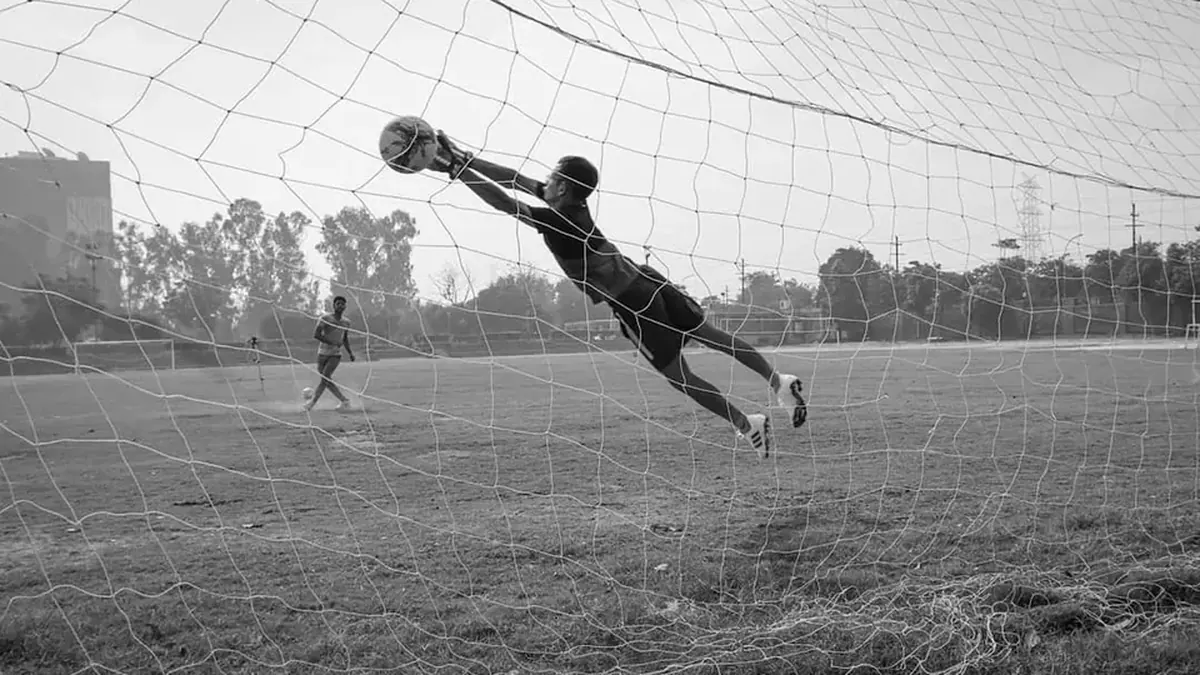
The moment the ball is lost is the moment the game’s most critical decision is made. For Manchester United, a club historically defined by attacking verve and transition-based brilliance, the ability to counter-press after losing possession has become the defining metric separating competent sides from genuine title contenders. Under the current stewardship, the Red Devils have sought to institutionalize a principle that once came instinctively to Ferguson’s best teams—the immediate, coordinated response to dispossession. This tactical pillar, when executed correctly, transforms a defensive liability into an offensive weapon, shortening the distance between recovery and goal.
The Conceptual Foundation: Why Counter-Pressing Matters
Counter-pressing, often termed gegenpressing in its modern iteration, is not merely about chasing the ball with frantic energy. It represents a structured, collective reaction to turnover that aims to recover possession within a defined temporal and spatial window—typically the first three to five seconds after loss. The rationale is straightforward: immediately after losing the ball, the opposition is at its most vulnerable. Players are transitioning from attack to defense, their heads are turned toward goal, and their defensive shape is incomplete. A well-executed counter-press exploits this structural disarray.
For Manchester United, the relevance of this concept transcends tactical fashion. The club’s identity has always been intertwined with rapid transitions—from the Busby Babes’ fluid forward play to Ferguson’s devastating counter-attacks spearheaded by the likes of Cristiano Ronaldo and Wayne Rooney. Counter-pressing serves as the bridge between defensive solidity and attacking explosiveness. When United lose possession in the final third, a successful counter-press can create immediate goal-scoring opportunities from positions where the opposition has committed numbers forward. Conversely, failure to counter-press leaves the defense exposed to rapid transitions—a vulnerability that has plagued post-Ferguson United sides.
Structural Requirements: The Tactical Blueprint
A tactical framework demands specific structural prerequisites for effective counter-pressing. The first is compactness. United’s out-of-possession shape must maintain tight vertical and horizontal spacing—typically no more than 15–20 meters between the defensive line and the forward-most presser. When this compactness is maintained, the distance a player must cover to engage in the counter-press is minimized, and the supporting players can form a recovery net around the ball.
The second requirement is role clarity. Under a structured system, each player understands their specific responsibility upon loss of possession. The nearest player to the ball initiates the press, cutting off the most dangerous passing lane—usually the forward pass or the pass to the central midfielder who can turn. The second-nearest player provides cover, cutting off the backward pass or the switch of play. The third layer—typically a full-back or central midfielder—drops into the space vacated by the pressing players, ensuring that if the opposition does break the first wave, they are met by a compact defensive block rather than an open field.
Bruno Fernandes, as the captain and creative fulcrum, plays a dual role in this structure. His aggressive pressing triggers the initial counter-press, while his spatial awareness allows him to anticipate where the ball will be recovered. His willingness to engage in the dirty work of pressing, despite his primary creative responsibilities, sets the tone for the entire squad.
Positional Specifics: The Frontline and Midfield Trigger Points
The effectiveness of Manchester United’s counter-press is heavily dependent on the personnel deployed in the forward and midfield positions. A striker with a physical profile that suggests a traditional target man, but with exceptional mobility and work rate, can be a critical component. When United lose possession, the striker’s initial movement is not to retreat but to close down the nearest opposition defender, often forcing a hurried clearance or a backward pass. His long stride allows him to cover ground quickly, and his body positioning forces the opposition into predictable passing lanes.
Alongside the striker, the wide forwards provide the lateral intensity that makes United’s counter-press difficult to bypass. A wide forward with a reputation for reading the moment of turnover before it happens can anticipate the pass that will lead to dispossession, positioning himself to intercept the subsequent outlet. This anticipatory pressing reduces the distance between recovery and goal, often creating chances from central areas where the opposition’s defense is still transitioning.
In midfield, the balance between press resistance and counter-pressing is delicate. United’s midfielders must be capable of both receiving the ball under pressure and immediately transitioning to a defensive mindset upon loss. The central midfield pairing—often a combination of a deep-lying playmaker and a box-to-box runner—must maintain spatial awareness that allows them to cover the half-spaces. When the counter-press is triggered, the midfielders must step forward to close the gaps, preventing the opposition from playing through the lines. This requires exceptional communication and positional discipline, as a single midfielder stepping out of line can create a numerical advantage for the opposition.
Comparative Analysis: Counter-Pressing Across Eras
To understand the evolution of counter-pressing at Manchester United, it is instructive to compare the current approach with previous tactical eras. The following table outlines key differences in counter-pressing philosophy and execution across distinct periods:
| Tactical Era | Primary Approach | Trigger Zones | Recovery Speed | Outcome Efficiency |
|---|---|---|---|---|
| Ferguson Era (1990s–2000s) | Reactive, individual-based pressing | Midfield third | Moderate | High transition goal rate |
| Post-Ferguson (2013–2022) | Disorganized, shape-dependent | Defensive third | Slow | Low recovery rate, high vulnerability |
| Current Era | Structured, collective counter-press | Final third and midfield | Rapid | Balanced recovery and goal creation |
The Ferguson era relied heavily on individual pressing triggers—players like Roy Keane or Paul Scholes would engage based on instinct and reading of the game, rather than a coordinated team structure. This approach was effective because of the exceptional football intelligence of the players involved, but it was not systematically reproducible. The post-Ferguson period saw a significant decline in pressing organization, with United often retreating into a deep block after losing possession, ceding control of the game. The current approach represents a middle ground: structured enough to be repeatable, yet flexible enough to adapt to different opposition setups.
Risks and Vulnerabilities: When Counter-Pressing Fails
Counter-pressing is not without its risks, and Manchester United has experienced the consequences of its failure on multiple occasions. The most significant vulnerability is the exposure of space behind the pressing players. When the counter-press is broken—typically through a well-timed switch of play or a dribble past the first presser—United’s defensive structure is compromised. The full-backs, who have stepped forward to support the press, are left isolated against rapid wingers. The central defenders are forced to cover large spaces, often leading to one-on-one situations.
Another risk is physical fatigue. Counter-pressing demands exceptional fitness levels, as players must repeatedly sprint to close down opposition players immediately after making attacking runs. In matches where United has faced high-intensity opposition—such as encounters with top-four rivals—the cumulative effect of sustained counter-pressing can lead to a drop in intensity in the final stages. This can result in late goals conceded, as the pressing structure fractures and the opposition finds space to exploit.
The following table summarizes the primary risks associated with counter-pressing and possible mitigation strategies:
| Risk Factor | Description | Mitigation Strategy |
|---|---|---|
| Space behind press | Opposition switches play to exposed flanks | Full-backs maintain awareness of cover; central midfielders drop into half-spaces |
| Physical fatigue | Reduced pressing intensity in later stages | Rotational substitutions; tactical fouls to break opposition rhythm |
| Numerical disadvantage | Opposition overloads pressing area | Compact shape reduces effective space; players prioritize cutting passing lanes over chasing ball |
| Individual errors | Misjudged pressing timing leads to easy bypass | Video analysis and repetition in training; clear role assignment |
The Role of Youth and Academy Integration
Manchester United’s academy has historically produced players with innate tactical intelligence, and a structured system relies on this tradition. Young players integrated into the first team are expected to understand the principles of counter-pressing from their earliest days in the youth setup. The U21 and U18 teams operate with similar tactical frameworks, ensuring that when a young player is promoted, the transition is seamless.
The academy’s emphasis on positional play and pressing triggers helps produce players who can contribute to the first team’s counter-pressing structure. These players are taught to recognize pressing cues—the angle of an opponent’s body, the weight of a pass, the positioning of supporting players—and to react instinctively. This investment in tactical education ensures that United’s counter-pressing is not dependent on a single generation of players but is embedded in the club’s DNA.
Tactical Adaptations: Adjusting to Opposition Profiles
No single counter-pressing structure works against all opponents, and tactical flexibility is required in adapting United’s approach based on the opposition’s tactical profile. Against teams that build from the back with short passes—such as Manchester City or Arsenal—United’s counter-press is triggered higher up the pitch, aiming to force errors in the defensive third. The forwards are instructed to press the center-backs and goalkeeper, while the midfielders cut off passing lanes to the deep-lying playmaker.
Against teams that favor direct, long-ball approaches—such as Burnley or Everton—the counter-press is adjusted to a lower trigger point. United allows the opposition to play long balls into the final third, then immediately counter-presses upon the second ball. This approach reduces the risk of being caught out of shape by a long pass over the top, while still maintaining the intensity of the recovery attempt.
Conclusion: The Future of Counter-Pressing at Manchester United
Counter-pressing after losing possession is not merely a tactical trend; it is a fundamental requirement for any team aspiring to compete at the highest level of English and European football. For Manchester United, the systematic implementation of this principle can provide a defensive foundation upon which attacking creativity can flourish. Improved ball recovery rates in the final third and better defensive transition metrics would suggest that investment in this tactical approach is yielding tangible results.
However, the journey is incomplete. The vulnerabilities exposed by sustained pressing, the physical demands placed on the squad, and the occasional lapses in concentration that lead to goals conceded remain areas for improvement. As the tactical framework continues to be refined, the integration of youth, the strategic recruitment of players with pressing intelligence, and the ongoing analysis of opposition patterns will determine whether Manchester United’s counter-pressing evolves from a tactical strength into a defining characteristic.
Reader Comments (0)