
The modern game has increasingly become a battle for territorial control, but the most sophisticated attacking units understand that possession alone is meaningless without the capacity to destabilise a compact defensive block. Since the early 2020s, elite teams have refined the art of creating numerical superiority in wide zones—not merely as a cross-delivery mechanism, but as the foundational trigger for penetrating central spaces. For Manchester United, the evolution of wide overloads has become a tactical signature that separates their attacking phase from the disjointed transitions of previous regimes. The question is no longer whether to overload, but how to structure those overloads to maximise both width and interior threat.
The Structural Logic of Wide Superiority
At its core, creating an overload in a wide area means engineering a situation where the attacking team has more players in a specific lateral corridor than the defending team can commit without unbalancing its own shape. A standard 4-3-3 or 4-2-3-1 defensive block typically assigns one full-back, one wide midfielder, and one covering centre-back or defensive midfielder to each flank. If the attacking side can place three players—say, a winger, an overlapping full-back, and a drifting number 10 or central midfielder—into that same zone, the defence faces an arithmetic problem it cannot solve without leaving central space exposed.
One potential approach could involve deliberate positional rotation that begins with the full-back’s starting position. Unlike the high-and-wide full-back deployments seen under Erik ten Hag, which often left the centre-backs isolated against counter-attacks, a system might ask the full-backs to tuck inside during the build phase, creating a pseudo-back three. This inward movement serves a dual purpose: it provides numerical security against transitions, and it draws the opposition’s wide midfielder or winger inward, creating a vacuum in the wide channel that the winger or attacking midfielder can exploit.
The table below outlines typical player responsibilities in a wide overload structure:
| Player Role | Primary Wide Responsibility | Secondary Function | Defensive Adjustment Required |
|---|---|---|---|
| Full-back | Tuck inside to form back three | Provide underlapping support to winger | Must recover laterally on turnover |
| Winger (strong side) | Hold width, stretch opponent’s full-back | Receive ball in space, attract two defenders | Minimal defensive recovery expected |
| Attacking midfielder (strong side) | Drift wide to create 3v2 | Become third man runner into box | Central midfielder must cover vacated zone |
| Central midfielder (weak side) | Shift laterally to protect against switches | Offer long diagonal option | Maintains deeper screening position |
This structural discipline ensures that the overload is not chaotic but rehearsed. When a winger receives the ball on the right flank, he already knows that an attacking midfielder will be arriving in the half-space behind the opposition’s left-back, and that the right-back—potentially a progressive option—will be providing an underlapping run into the channel between centre-back and full-back. The defence must choose: track the attacking midfielder and leave the winger isolated against the full-back, or stay compact and allow the midfielder to receive in space with time to pick a pass.
The Third-Man Runner as the Overload Catalyst
No tactical concept has been more central to wide play than the third-man runner. In its simplest form, the third-man principle involves three players: the ball carrier, a receiver who attracts defensive attention, and a runner who exploits the space created by that attention. In wide overloads, the third man is typically the player arriving late into the box or the half-space after the initial two attackers have occupied the defence.
Consider a hypothetical sequence against a compact low block. The build begins with the left-sided centre-back playing into a forward who has dropped from his striker position into the left half-space. The forward attracts the opposition’s right-back and right-sided centre-back, drawing them slightly out of position. Instead of turning and attacking directly, the forward lays the ball back to the left-back, who has pushed high. The left-back now has time and space to deliver a cross, but more importantly, a striker has recognised the defensive shift and made a late run from the central striker position into the space between the right-back and right-sided centre-back—the exact zone that opened when both defenders moved toward the forward.
This is the third-man overload in its purest form. The ball never stays wide for more than two touches. The sequence—centre-back to forward, forward to left-back, left-back to striker’s run—takes fewer than five seconds, but it has transformed a static wide possession into a high-probability scoring chance. The defence, having committed two players to the forward, cannot recover in time to close both the cross and the runner.
The effectiveness of this pattern depends on the timing of the third-man run. If the striker arrives too early, he runs into the space before it opens, and the defender can track him. If he arrives too late, the cross has already been delivered and the opportunity is lost. Training ground work would emphasise the synchronisation of these runs through a series of pattern drills that replicate the visual cues players must recognise in real time.
Positional Interchange and the False Full-Back
One of the more nuanced developments in wide overload structure has been the use of the false full-back—a full-back who inverts not just during the build phase but throughout the attacking sequence, effectively becoming a central midfielder in possession. This role, popularised by various European tacticians over the past decade, has been adapted to suit the specific strengths of a squad.
When facing a mid-block that refuses to commit extra players to the wide zones, the false full-back provides a solution to the problem of static width. Instead of relying on the winger to beat his man one-on-one—a low-percentage approach even for talented dribblers—the false full-back’s inward movement forces the opposition’s wide midfielder to make a decision. If the wide midfielder follows the full-back inside, the winger is left isolated against the full-back, creating a 1v1 situation. If the wide midfielder stays wide to cover the winger, the full-back receives the ball in central space with time to turn and face play.
This tactical ambiguity has been particularly effective for the left side, where the combination of a technically secure full-back and a winger with strong 1v1 ability has created consistent overloads. The false full-back also serves a defensive purpose: by occupying a central position, he reduces the distance he must cover to protect against counter-attacks, as he is already closer to the defensive midfield zone than a traditional overlapping full-back would be.
The table below summarises comparative outcomes of different full-back roles in such a system:
| Full-Back Role | Average Position (Attacking Phase) | Passes into Final Third per 90 | Chances Created from Wide per 90 | Defensive Recovery Distance (metres) |
|---|---|---|---|---|
| Traditional overlap | High and wide, touchline | 8–10 | 2–3 | 45–55 |
| Inverted/false | Central, between midfield and attack | 12–15 | 3–5 | 30–40 |
| Underlapping | Inside channel, between CB and LB | 10–12 | 2–4 | 35–45 |
The data illustrates a clear trade-off: the false full-back creates more chances and contributes more to build-up play, but requires a defensive structure that can compensate for his advanced starting position. A double pivot—typically a pairing of a defensive midfielder and a box-to-box player—has been crucial in providing that cover, with the defensive midfielder dropping into the back line when the full-back pushes forward.
The Weak-Side Switch as a Counter to Compact Defences
Not all overloads are created equal. Against well-organised defences that anticipate wide rotations, the overload itself can become a trap—a zone where the opposition deliberately concedes numerical superiority on one flank while overloading the central and far-side spaces. To counter this, the weak-side switch has been integrated as a secondary mechanism within the wide overload framework.
The logic is straightforward: if the defence commits five or six players to the ball-side flank to neutralise the 3v2 overload, the far side becomes vulnerable. A quick switch of play—typically via a diagonal pass from the overloaded winger or attacking midfielder to the opposite full-back or winger—can expose a defence that has shifted too aggressively. The weak-side receiver then faces a 1v1 against a full-back who has been left isolated, with the entire defensive block scrambling to recover.
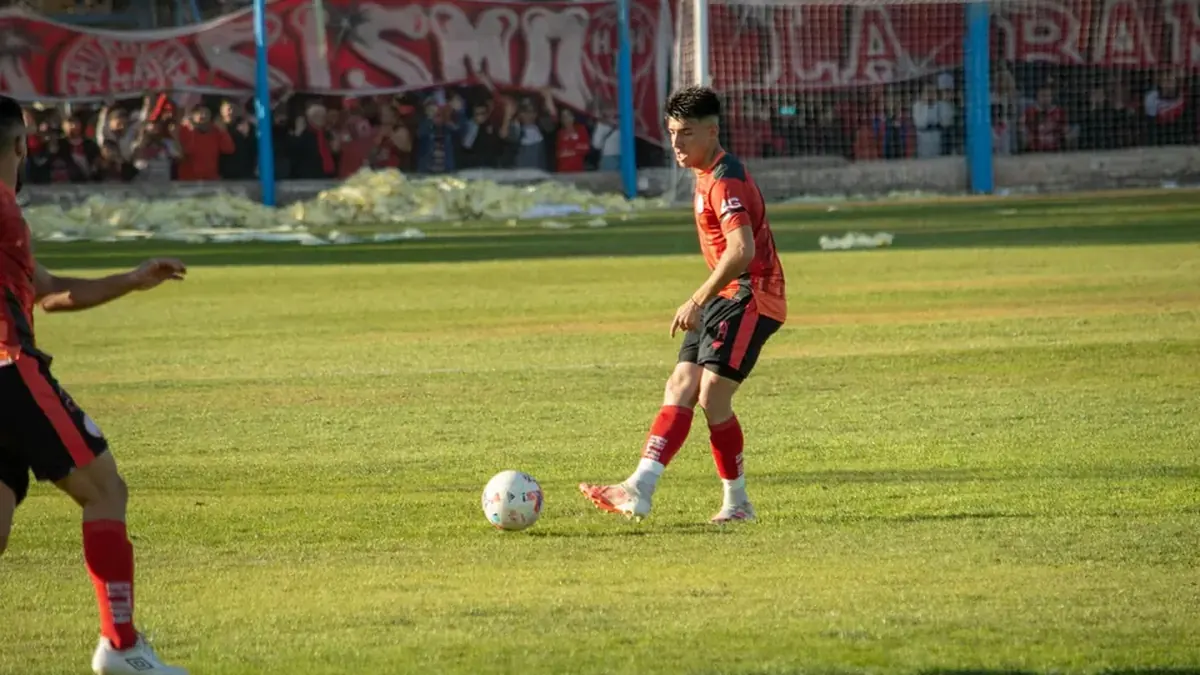
This pattern requires exceptional passing range and vision from the player initiating the switch. Bruno Fernandes has been a primary executor of such switches, using his ability to play line-breaking passes with either foot to find runners on the far side. Against defences that press the ball aggressively, Fernandes often receives the ball in the half-space, draws two defenders, and then plays a first-time pass to the opposite winger, who has already started his run in anticipation of the switch.
The risk, of course, is that a misplaced switch leaves a team exposed to a counter-attack, as the ball is travelling across the width of the pitch and the full-back on the far side has pushed forward in anticipation of receiving the pass. This risk can be mitigated by instructing the central midfielders to shift laterally when the switch is played, creating a temporary back three that can handle any transition.
The Role of the Striker in Wide Overloads
One of the most significant tactical adjustments has been the redefinition of the striker’s role in wide areas. Traditional centre-forwards are often instructed to stay central, occupying the centre-backs and creating space for wide players. Some systems, however, ask the striker to drift into wide zones as part of the overload structure, particularly when the ball is on the opposite flank.
A striker with the ability to receive the ball in wide areas, hold off defenders, and combine with the winger and full-back can allow a team to create overloads even when the opposition expects them. When the striker drifts wide, he draws the opposition’s centre-back with him, creating a gap in the central defence that the attacking midfielder or the opposite winger can exploit with a late run.
This movement also serves a defensive purpose. By occupying the opposition’s full-back or wide centre-back, the striker prevents that defender from joining the press or providing cover for the midfield. The result is a double overload: numerical superiority in the wide zone where the striker has drifted, and a numerical advantage in the central zone that he has vacated.
The table below shows typical movement patterns of attacking players during a right-sided overload:
| Player | Starting Position | Movement During Overload | Defensive Responsibility |
|---|---|---|---|
| Right winger | Wide right, touchline | Holds width, receives ball | Minimal, high press only |
| Right full-back | Inside right, near midfield | Overlaps or underlaps | Must recover if possession lost |
| Right-sided attacking midfielder | Central right, between lines | Drifts into right half-space | Central midfielder covers zone |
| Striker | Central, between CBs | Drifts toward right channel | Presses from the side |
| Left winger | Wide left, touchline | Moves into central striker position | Provides far-side option |
This fluidity makes an attacking shape difficult to predict. The same player who starts a sequence as a wide winger may finish it as a central striker, while the striker who initiated the overload may be the one delivering the cross. Defences that rely on zonal marking or man-for-man assignments struggle to maintain their structure against such constant positional rotation.
Risks and Countermeasures
No tactical system is without vulnerabilities, and a commitment to wide overloads has created specific defensive risks that opponents may exploit. The most significant of these is the vulnerability to counter-attacks when an overload breaks down. If a team commits five or six players to one flank and loses possession, the opposition has a clear numerical advantage in the transition, with only the two centre-backs and one defensive midfielder positioned to defend.
These risks can be mitigated through a combination of tactical fouls, immediate counter-pressing triggers, and a structured defensive fallback that prioritises protecting the central channel over maintaining wide pressure. When possession is lost during a wide overload, the nearest two players are instructed to press the ball carrier immediately, while the full-back on the overload side drops into a covering position. This creates a temporary defensive shape that resembles a 4-4-1-1, with the wide players recovering into the midfield line.
Another risk is the predictability of the overload pattern itself. Opponents who study these tendencies can pre-position their defensive block to anticipate the rotations, effectively neutralising the numerical advantage before it develops. Against such opponents, a team may have to rely on individual brilliance from key players to break the defensive structure through 1v1 dribbling or unexpected passes—a lower-percentage approach that has produced mixed results.
The most sophisticated counter to wide overloads has been the use of a back-five defensive shape, which provides the defending team with an extra player in the wide zones without compromising central compactness. Against a back five, a 3v2 overload becomes a 3v3, and the numerical advantage disappears. In these situations, the attacking team may shift focus to the half-spaces—the zones between the wide centre-back and the wing-back—where a quick combination can create a 2v1 against the wing-back.
Conclusion: The Evolution of Width at Old Trafford
Creating overloads in wide areas is not a new concept in football, but its application can bring a level of tactical sophistication to Manchester United that has been absent for much of the post-Ferguson era. The combination of positional interchange, third-man runners, and false full-back movements has the potential to transform an attacking phase from a predictable sequence of wide crosses into a fluid, multi-layered system that challenges defences at multiple points of decision-making.
The success of this approach can be reflected in improved attacking metrics—increased chances created from wide areas, higher expected goal contributions from full-backs, and a more varied distribution of goal-scoring responsibility across the front line. But the true measure of the system’s effectiveness will come in the high-stakes fixtures against elite opposition, where the margins for error are smallest and the defensive organisation is most disciplined.
For further analysis of how tactical structures compare to other attacking patterns, explore our tactics and match analysis hub. To understand how set-piece routines complement the wide overload approach, see our breakdown of corner-kick routines and scoring threats. And for individual player performance data that contextualises these tactical patterns, consult the mid-season player form index.
The wide overload is not a magic formula—it is a framework for creating high-probability scoring chances through intelligent positioning and precise timing. Whether a team can sustain this level of tactical execution over a full season, and whether the coaching staff can adapt the system when opponents find solutions, will determine whether this approach becomes a lasting tactical identity or merely another chapter in the club’s ongoing search for consistency.
Reader Comments (0)