
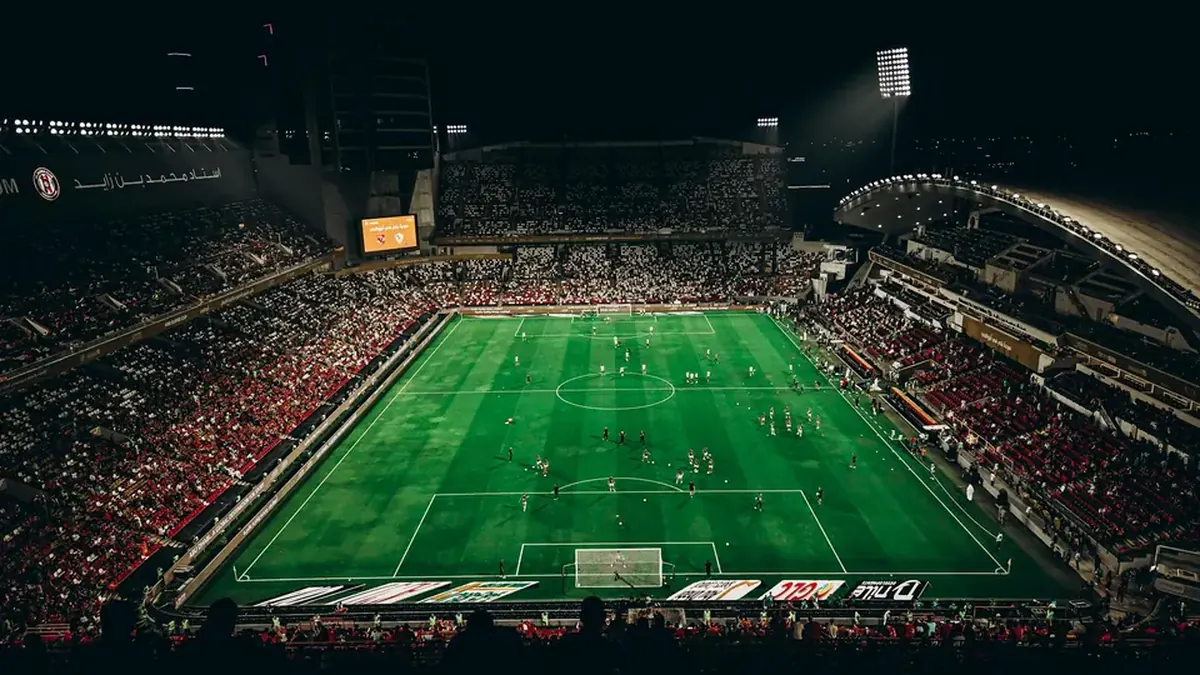
The narrative of Cristiano Ronaldo at Manchester United is not merely a tale of two distinct periods separated by twelve years; it is a study in the evolution of a prodigy into a global icon, and a reflection of the club’s own transformation across eras. Few players in the history of football have returned to a former club under circumstances so dramatically different, and fewer still have managed to leave an indelible mark in both a fledgling and a veteran stage of their career. To understand Ronaldo’s legacy at Old Trafford is to examine the boy who arrived from Sporting Lisbon with raw promise and the man who returned from Real Madrid as a living legend, each stint contributing to a singular, complex heritage.
The Prodigy: 2003–2009 and the Forging of a Superstar
When an eighteen-year-old Cristiano Ronaldo first stepped onto the training pitches of Carrington in the summer of 2003, he was an unknown quantity to the wider English football public. Sir Alex Ferguson, having identified the talent during a pre-season friendly against Sporting Lisbon, moved decisively to secure the signing. The fee, while substantial for a teenager, was seen as an investment in potential rather than an immediate guarantee of success. Within weeks, Ronaldo’s debut as a substitute against Bolton Wanderers electrified the Old Trafford crowd, his fleet-footed dribbling and audacious stepovers offering a glimpse of the artistry that would define his early years in Manchester.
The period from 2003 to 2006 was one of gradual but unmistakable growth. Ronaldo’s early seasons were characterised by flair and frustration in equal measure; his trickery often drew fouls and created space, yet his end product—goals and assists—remained inconsistent. Critics questioned whether his individualistic style could be integrated into a team structure that demanded collective discipline. Ferguson, however, provided the environment for development, shielding his young charge from excessive pressure while instilling the work ethic required to thrive in the Premier League. The turning point arrived during the 2006–07 campaign, when Ronaldo began to channel his raw talent into tangible output. His goal tally rose significantly, and his influence on matches became decisive. That season, Manchester United reclaimed the Premier League title after a four-year drought, with Ronaldo contributing a remarkable number of goals from midfield.
The 2007–08 season stands as the zenith of Ronaldo’s first stint. In this campaign, he evolved from a promising winger into the most complete attacking player in world football. Scoring over forty goals across all competitions, he led United to a Premier League and UEFA Champions League double. His performance in the Champions League final against Chelsea, where he scored the opening goal and converted his penalty in the shootout, cemented his status as the best player on the planet. The individual accolades followed: the Ballon d’Or, the FIFA World Player of the Year, and the European Golden Shoe. By the summer of 2009, when he departed for Real Madrid in a world-record transfer, Ronaldo had not only fulfilled his potential but had redefined what was possible for a wide forward.
Tactical Evolution Under Ferguson
| Season | Primary Position | Goals (All Competitions) | Key Tactical Role |
|---|---|---|---|
| 2003–04 | Right Winger | 6 | Wide dribbler, penalty-box threat from crosses |
| 2004–05 | Right Winger | 9 | Increased direct running, set-piece responsibility |
| 2005–06 | Right Winger / Forward | 12 | Greater freedom to drift inside |
| 2006–07 | Right Winger / Second Striker | 23 | Primary goal-scoring threat from wide |
| 2007–08 | Forward / Attacking Midfielder | 42 | Central playmaker and finisher |
| 2008–09 | Forward | 26 | Complete forward, dropping deep to link play |
The table above illustrates the tactical metamorphosis that Ferguson orchestrated. Initially deployed as a traditional right winger, Ronaldo was gradually given licence to operate centrally, where his finishing ability, aerial prowess, and physical strength could be maximised. This positional fluidity made him virtually unmarkable; defenders could not predict whether he would attack the byline, cut inside, or make a late run into the box. By his final season, he was effectively a centre-forward who roamed across the frontline, a precursor to the modern false nine role.
The Return: 2021–2022 and the Complexity of a Second Act
When Manchester United announced in August 2021 that Cristiano Ronaldo would return to the club, the reaction was a mixture of euphoria and scepticism. The euphoria stemmed from the romantic notion of a club legend returning to the Theatre of Dreams; the scepticism arose from the practical realities of a 36-year-old forward joining a squad that had struggled for tactical coherence under Ole Gunnar Solskjær. The transfer, completed late in the summer window, was a statement of intent from a club seeking to reclaim its place among Europe’s elite.
Ronaldo’s second debut against Newcastle United was a masterclass in narrative. He scored twice, the first a poacher’s finish from close range and the second a composed strike from outside the box, as Old Trafford erupted in celebration. For the first few months of the 2021–22 season, Ronaldo’s goals masked deeper structural issues within the team. He scored crucial winners against Villarreal, Atalanta, and Arsenal, single-handedly securing points that kept United competitive in the Champions League group stage and the Premier League top-four race. His movement in the penalty area remained world-class, and his ability to finish with either foot or his head made him a constant threat.
However, the limitations of integrating a veteran forward into a high-pressing system became increasingly apparent. As the season progressed, United’s defensive vulnerabilities were exposed, and the team’s inability to press effectively from the front placed additional strain on the midfield and defence. Ronaldo’s diminished mobility meant that United often played with a de facto numerical disadvantage when out of possession. The tactical compromises required to accommodate his strengths—namely, playing him as a central striker with minimal defensive responsibility—clashed with the demands of modern football, where forward players are expected to contribute to the collective defensive shape.
Statistical Comparison: First Stint vs. Second Stint
| Metric | First Stint (2003–2009) | Second Stint (2021–2022) |
|---|---|---|
| Appearances (All Competitions) | 292 | 54 |
| Goals (All Competitions) | 118 | 27 |
| Goals per Game | 0.40 | 0.50 |
| Premier League Goals | 84 | 19 |
| Assists (All Competitions) | 69 | 5 |
| Trophies Won | 9 | 0 |
| Ballon d’Or Wins | 1 | 0 |
The statistics reveal a fascinating paradox. In his second stint, Ronaldo’s goal-scoring rate actually improved, reflecting his evolution into a pure finisher who conserved energy for decisive moments. Yet the absence of trophies underscores the broader decline in the team’s competitiveness. Where the first stint coincided with a period of sustained dominance under Ferguson, the second stint occurred during a phase of transition and instability, with three different managers—Solskjær, Ralf Rangnick, and Erik ten Hag—overseeing the team within the space of eighteen months.
The Managerial Carousel and Tactical Mismatch
The return of Ronaldo coincided with a period of unprecedented managerial instability at Old Trafford. Ole Gunnar Solskjær, who had overseen the transfer, was dismissed in November 2021 following a run of poor results. His successor, Ralf Rangnick, arrived with a reputation as a tactical innovator, but the interim manager struggled to implement his high-pressing philosophy with a squad that was neither conditioned nor suited to such demands. Rangnick’s attempts to deploy Ronaldo as a pressing forward were met with limited success; the player’s strengths lay in finishing moves, not initiating them.
The appointment of Erik ten Hag in the summer of 2022 signalled a clear philosophical shift. Ten Hag, who had built his reputation at Ajax on structured positional play and intense pressing, required his forwards to lead the defensive effort from the front. Ronaldo, by then 37 years old, was not naturally suited to this role. The pre-season of 2022 was marked by tension, as Ronaldo missed much of the tour due to personal reasons and subsequently expressed a desire to leave the club. When he remained, the relationship between player and manager became strained. Ten Hag’s decision to use Ronaldo primarily as an impact substitute reflected a pragmatic assessment of the player’s capabilities within the team’s tactical framework.
The situation reached its nadir in November 2022, when Ronaldo gave an explosive interview in which he criticised the club’s infrastructure, the manager, and several senior figures. The interview, broadcast globally, made his departure inevitable. On 22 November 2022, Manchester United announced that Ronaldo would leave the club by mutual agreement, bringing an end to his second stint with immediate effect. The manner of his exit was a stark contrast to the emotional farewell of 2009.
Legacy: Beyond the Numbers
To assess Cristiano Ronaldo’s legacy at Manchester United is to separate the two stints while recognising that they form part of a single, extraordinary career. The first stint established him as one of the greatest players in the club’s history. His contributions to the 2008 Champions League triumph, his role in three consecutive Premier League titles, and his individual brilliance during the 2007–08 season place him in the pantheon alongside George Best, Bobby Charlton, and Eric Cantona. For supporters who witnessed his development from a skinny teenager into a Ballon d’Or winner, the memories of his dribbles, his free kicks, and his insatiable hunger for victory remain vivid.
The second stint, while less successful in team terms, demonstrated his enduring quality as a goal-scorer. Scoring 27 goals in 54 appearances for a team that finished sixth in the Premier League and failed to win a trophy is a remarkable achievement for a player in his mid-thirties. It also highlighted the disconnect between individual brilliance and collective success in modern football. Ronaldo’s return was a commercial and emotional success—shirt sales soared, global attention intensified—but it could not mask the structural deficiencies that had plagued the club since Ferguson’s retirement.
The broader lesson of Ronaldo’s two stints lies in the contrast between eras. The first stint was a product of Ferguson’s ability to build a team around a generational talent while maintaining a cohesive system. The second stint revealed the difficulty of integrating a veteran superstar into a squad lacking direction and identity. For Manchester United, the challenge remains to create an environment where individual brilliance can flourish within a collective framework, a balance that Ferguson mastered and that subsequent managers have struggled to replicate.
The Risky Return: Lessons for Future Transfers
The decision to re-sign Cristiano Ronaldo carried inherent risks that became increasingly apparent as his second stint unfolded. These risks are instructive for any club considering the return of a former legend, particularly one approaching the twilight of their career.
| Risk Factor | Manifestation During Second Stint |
|---|---|
| Tactical Inflexibility | Ronaldo’s limited pressing ability forced the team to adopt a lower defensive block, exposing defensive vulnerabilities |
| Wage Structure Disruption | His salary, among the highest in the squad, created internal salary tensions and limited flexibility in the transfer market |
| Squad Dynamics | Younger players, such as Marcus Rashford and Jadon Sancho, saw their development opportunities reduced |
| Media Scrutiny | The global attention on Ronaldo amplified every negative result and internal disagreement |
| Exit Complications | The public nature of his departure damaged the club’s reputation and created a distraction during a critical season |
These risks were not unforeseeable. Ferguson himself had managed the departures of ageing stars—including Eric Cantona, David Beckham, and Ruud van Nistelrooy—with a ruthlessness that prioritised the team over the individual. The decision to bring Ronaldo back, driven by a combination of commercial opportunity and emotional sentiment, represented a departure from that philosophy. For future transfer windows, the club would be wise to weigh the short-term benefits of a marquee signing against the long-term strategic coherence of the squad.
Conclusion: A Legacy of Two Halves
Cristiano Ronaldo’s legacy at Manchester United is ultimately defined by the sum of its parts. The first stint gave the club one of its greatest ever players and a Champions League title; the second stint gave the club goals, drama, and a cautionary tale about the dangers of nostalgia. For the supporters who cheered his every goal, both stints are part of the same story—a story of a boy from Madeira who became a man at Old Trafford, left to conquer the world, and returned to remind everyone of his greatness, even as the world around him had changed.
The question that lingers is not whether Ronaldo belongs in the pantheon of Manchester United legends—he does, without question—but whether his second stint will be remembered as a triumphant return or a missed opportunity. The answer, like his career, is complex. In the context of the club’s broader history, which includes the rebuilding after the Munich air disaster, the dominance of the Busby Babes and the Ferguson era, and the ongoing challenges of the post-Glazer era, Ronaldo’s two stints serve as a mirror reflecting both the club’s enduring allure and its current struggles.
For a deeper exploration of Manchester United’s historical journey, readers may refer to the comprehensive history of the club. Additionally, the ongoing fan-owned movements at Manchester United offer insight into the supporter-led efforts to shape the club’s future. The club’s commitment to inclusivity is further reflected in the history of the women’s team, a growing part of the United family.
Reader Comments (0)