
In the annals of Manchester United Football Club, few names resonate with the same enduring brilliance as George Best. To speak of him is to speak of a paradox—a footballer whose sublime talent illuminated the Theatre of Dreams, yet whose life off the pitch often cast long shadows over his achievements. Best was not merely a player; he was a cultural phenomenon, a figure who transcended the sport and redefined what it meant to be a Manchester United icon. His arrival at Old Trafford in the early 1960s came at a pivotal moment for the club, still rebuilding from the tragedy of Munich and seeking a new identity under Sir Matt Busby. In Best, the club found not just a winger of extraordinary ability, but a symbol of flair, rebellion, and genius that would forever alter the club’s trajectory.
The Making of a Legend: From Belfast to Old Trafford
George Best’s journey to Manchester United began in the streets of Belfast, Northern Ireland, where his natural affinity for the ball was evident from an early age. Discovered by United scout Bob Bishop, who famously telegrammed Busby with the words, “I think I’ve found you a genius,” Best was signed as a schoolboy and moved to Manchester at the age of fifteen. The transition was not without difficulty; he struggled with homesickness and nearly returned to Ireland. However, Busby’s patience and the nurturing environment of the club’s youth system—a legacy of the Busby Babes era—allowed Best to develop both technically and emotionally.
His first-team debut came in September 1963 against West Bromwich Albion, and it did not take long for the football world to take notice. Best possessed a rare combination of pace, balance, and close control that left defenders bewildered. He could dribble through tight spaces with an almost supernatural ease, his low centre of gravity making him virtually impossible to dispossess. By the 1964–65 season, he had become a regular in the side, helping United secure the First Division title—their first league championship since the Munich disaster. This early success was a harbinger of the greatness to come.
Redefining the Winger Role: A Tactical Evolution
To understand Best’s impact on Manchester United, one must consider the tactical landscape of English football in the 1960s. The traditional winger was often a wide player tasked with crossing the ball into the box, operating within rigid positional constraints. Best shattered this convention. He roamed across the forward line, drifting infield, exchanging passes with teammates, and creating chaos in opposition defences. His style was instinctive, improvisational, and utterly unpredictable.
| Aspect | Traditional Winger (1960s) | George Best’s Approach |
|---|---|---|
| Primary role | Deliver crosses from the flank | Dribble centrally, create scoring opportunities |
| Movement | Stay wide, hug the touchline | Roam across the pitch, interchange with forwards |
| Defensive contribution | Minimal tracking back | Occasional pressing, but focus on attacking freedom |
| Goal-scoring | Occasional, primarily from headers | Frequent, often from solo runs or long-range shots |
| Tactical instruction | Follow manager’s set patterns | Freedom to improvise, given creative licence by Busby |
This freedom was not granted lightly. Busby, a manager who valued discipline, recognised that Best’s genius could not be constrained by rigid tactics. The partnership between the two was symbiotic: Busby provided the structure and trust, while Best delivered moments of individual brilliance that turned matches. In many ways, Best became the prototype for the modern attacking midfielder or inverted winger—a role that would later be perfected by players like Cristiano Ronaldo and Lionel Messi.
The Pinnacle: European Glory in 1968
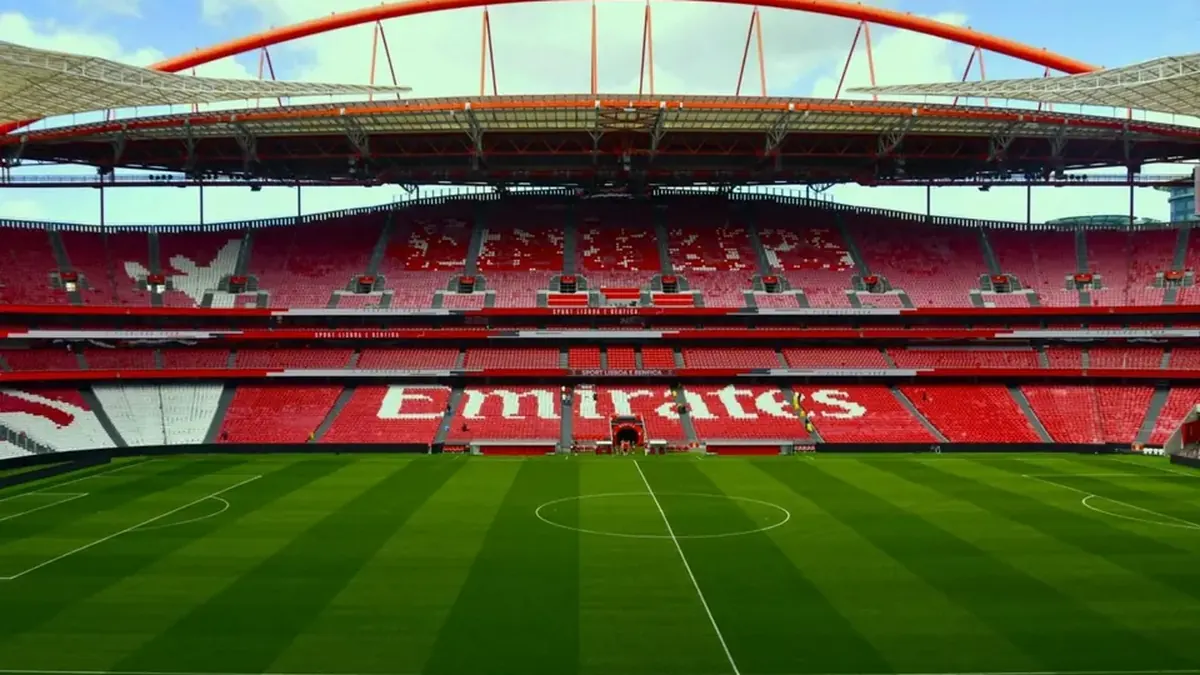
The crowning achievement of George Best’s career—and indeed of Manchester United’s history in that era—came on 29 May 1968, when the club defeated Benfica 4–1 after extra time to win the European Cup at Wembley Stadium. Best was sensational, scoring the opening goal with a composed finish and tormenting the Portuguese defence throughout the match. The victory was deeply symbolic: it marked the tenth anniversary of the Munich air disaster and fulfilled Busby’s dream of bringing the European trophy to Old Trafford.
Best’s performance in that final was a microcosm of his genius. He was not the tallest or strongest player on the pitch, but his intelligence and technical superiority made him unplayable. He scored with a header despite his diminutive stature, demonstrating his remarkable timing and leap. The goal, a glancing effort from a cross by David Sadler, was emblematic of his ability to contribute in ways that defied expectation. For his efforts, Best was awarded the Ballon d’Or later that year, becoming the youngest recipient of the award at the time.
The 1968 European Cup remains one of the most celebrated achievements in the club’s history. It was a triumph that united a generation of fans and solidified Manchester United’s status as a European powerhouse. For Best, it was the apex of a career that promised even more but would soon be overshadowed by personal struggles.
The Decline: Genius Unfulfilled
Tragically, the years following 1968 were marked by a gradual decline in Best’s form and focus. The pressures of fame, the temptations of nightlife, and a growing reliance on alcohol began to take their toll. He missed training sessions, clashed with managers, and saw his influence on the pitch diminish. By the early 1970s, Best was a shadow of the player who had dazzled Europe. He left Manchester United in 1974, having made 470 appearances and scored 179 goals—a remarkable tally for a winger, but one that could have been far greater had his career followed a different trajectory.
The story of Best’s decline is a cautionary tale about the fragility of talent and the importance of support systems. Manchester United, under Busby and later Wilf McGuinness, tried to protect him, but the club’s resources for player welfare were limited by the standards of the time. Best’s struggles were not unique—many players of his generation faced similar challenges—but his celebrity magnified them. He became a tabloid fixture, his personal life dissected in the press, and his battles with addiction played out in public view.
Legacy: The Eternal Red Devil
Despite the unfulfilled potential, George Best’s legacy at Manchester United is indelible. He is remembered as one of the most naturally gifted players ever to wear the red shirt, a figure whose artistry on the ball set a standard for creativity and flair. His influence can be seen in the generations that followed: from the trickery of Ryan Giggs to the directness of Cristiano Ronaldo, United’s tradition of wingers owes a debt to Best’s pioneering style.
Best also helped shape the club’s global identity. In an era before satellite television and mass marketing, his charisma and skill attracted fans from around the world. He was Manchester United’s first true global superstar, paving the way for the commercial growth that would define the club in later decades. The image of Best—dark hair, confident stride, ball glued to his feet—remains a powerful symbol of the club’s romantic past.
For further exploration of Manchester United’s rich history, readers are encouraged to visit the history and heritage section of our site, which delves into the stories of the Busby Babes, the Munich air disaster, and the club’s evolution. Additionally, profiles of other legendary figures, such as Sir Bobby Charlton and Eric Cantona, can be found in our academy graduates and success stories archive. For those interested in the matches that defined an era, our coverage of iconic matches in Manchester United history provides detailed accounts of the 1968 European Cup final and other landmark games.
Conclusion: A Genius for the Ages
George Best was more than a footballer; he was a force of nature who redefined what was possible on the pitch. His career at Manchester United was a blend of transcendent brilliance and human frailty, a story that continues to captivate fans decades after his final appearance for the club. While the question of what might have been lingers, the reality of what he achieved remains extraordinary. Best’s genius was not just in the goals he scored or the defences he dismantled, but in the joy he brought to those who watched him. He made the impossible look effortless, and in doing so, he ensured that his name would forever be synonymous with the magic of Manchester United.
Reader Comments (0)