Wayne Rooney
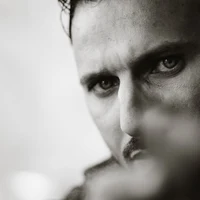
The all-time leading goalscorer for Manchester United, Wayne Rooney netted 253 goals across 559 appearances between 2004 and 2017. Arriving from Everton as an 18-year-old, Rooney surpassed Sir Bobby Charlton's long-standing record in January 2017 with a stoppage-time free kick against Stoke City. His goals came in every competition, but his Premier League tally of 183 goals for the club remains a benchmark. Rooney's versatility allowed him to play as a striker, attacking midfielder, or wide forward, and his work rate made him indispensable across multiple title-winning campaigns.
Sir Bobby Charlton
With 249 goals in 758 appearances from 1956 to 1973, Charlton held the club's scoring record for over four decades. A survivor of the Munich air disaster, Charlton's career spanned two eras: the Busby Babes and the post-Munich rebuild. He won three First Division titles, the FA Cup, and the 1968 European Cup, scoring twice in the final against Benfica. Charlton's ability to strike from distance and read the game made him one of the most complete midfielders of his generation.
Denis Law
The only Scottish player to win the Ballon d'Or while at Manchester United, Law scored 237 goals in 404 appearances from 1962 to 1973. Known for his electric movement and acrobatic finishes, Law was the focal point of Matt Busby's attack. His 46 goals in the 1963–64 season remain a club record for a single campaign. Law's legacy is complicated by his final goal for the club—a backheel for Manchester City in 1974 that relegated United, though he later expressed regret over the moment.
Jack Rowley
A prolific forward in the post-war years, Rowley scored 211 goals in 424 appearances between 1937 and 1955. His career was interrupted by World War II, but he returned to become the club's first truly modern striker. Rowley won three First Division titles and the 1948 FA Cup, scoring in the final. His 30 goals in the 1951–52 season helped United reclaim the league title after a four-decade wait.
George Best
The mercurial Northern Irishman scored 179 goals in 470 appearances from 1963 to 1974. Best's dribbling ability and balance made him a nightmare for defenders, and his peak years coincided with United's 1968 European Cup triumph, where he scored in the final. Despite his relatively short career at the top level, Best's goal return from the wing was extraordinary. He won two First Division titles and the Ballon d'Or in 1968.
Dennis Viollet
A key member of the Busby Babes, Viollet scored 179 goals in 293 appearances between 1953 and 1962. His 32 goals in the 1959–60 season remain one of the highest single-season tallies in club history. Viollet survived the Munich air disaster but never fully recovered his pre-crash form, though he continued to score consistently until his departure to Stoke City.
Ryan Giggs
The most decorated player in Manchester United history, Giggs scored 168 goals in 963 appearances from 1990 to 2014. Though primarily a winger, his longevity and consistency allowed him to climb the scoring charts. Giggs scored in every Premier League season from 1992 to 2013, a testament to his adaptability. His goal in the 1999 FA Cup semi-final replay against Arsenal remains one of the most iconic in club history.
Paul Scholes
A midfielder by trade, Scholes scored 155 goals in 718 appearances from 1993 to 2013. Known for his precise passing and devastating long-range shooting, Scholes was a goalscoring threat from midfield throughout his career. His 107 Premier League goals for United place him among the highest-scoring midfielders in league history. Scholes won 11 Premier League titles and two Champions League trophies.
Mark Hughes
The Welsh striker scored 163 goals in 467 appearances across two spells (1980–1986 and 1988–1995). Hughes was known for his physical strength and ability to hold up play, making him a perfect target man. He won two Premier League titles, three FA Cups, and the European Cup Winners' Cup. His goal in the 1991 European Cup Winners' Cup final against Barcelona was a stunning volley that showcased his technical ability.
Ruud van Nistelrooy
The Dutch striker scored 150 goals in 219 appearances between 2001 and 2006, giving him the best goals-per-game ratio of any United player with over 100 goals. Van Nistelrooy was a penalty-box predator, renowned for his movement and finishing. He won the Premier League Golden Boot in 2003 and was instrumental in United's 2003 title win. His 44 goals in all competitions during the 2002–03 season remain a modern benchmark.
David Beckham
The midfield icon scored 85 goals in 394 appearances from 1992 to 2003. While not a traditional goalscorer, Beckham's free kicks and crosses from wide positions made him a consistent threat. His goal from the halfway line against Wimbledon in 1996 remains one of the most famous in Premier League history. Beckham won six Premier League titles and the 1999 Champions League.
Cristiano Ronaldo
Across two spells (2003–2009 and 2021–2022), Ronaldo scored 145 goals in 346 appearances. His first stint saw him evolve from a flashy winger into the world's best player, winning the Ballon d'Or in 2008 after scoring 42 goals in all competitions. His return in 2021 yielded 24 goals in a single season, but the second spell was less successful overall. Ronaldo won three Premier League titles and the 2008 Champions League.

Ole Gunnar Solskjær
The Norwegian striker scored 126 goals in 366 appearances from 1996 to 2007. Known as the "Baby-faced Assassin," Solskjær was a super-sub who scored crucial goals, including the winning goal in the 1999 Champions League final. His best season came in 2001–02 when he scored 25 goals as a regular starter. Solskjær later managed the club from 2018 to 2021.
Andy Cole
Cole scored 121 goals in 275 appearances from 1995 to 2001. Signed from Newcastle United for a then-record fee, Cole formed a legendary partnership with Dwight Yorke. His 18 goals in the 1998–99 treble-winning season were vital, and he scored in the Champions League final. Cole's movement and finishing were underrated, and he remains one of the most clinical strikers of the Premier League era.
Brian McClair
The Scottish forward scored 126 goals in 471 appearances from 1987 to 1998. McClair was a versatile attacker who played as a striker and attacking midfielder. He scored 31 goals in his debut season, becoming the first United player to reach 20 league goals since George Best. McClair won four Premier League titles and three FA Cups.
Joe Spence
A pre-war legend, Spence scored 168 goals in 510 appearances from 1919 to 1933. He was the club's all-time leading scorer before the modern era and helped United win the Second Division title in 1925. Spence's record stood for decades, and he remains one of the most prolific scorers in the club's early history.
Stan Pearson
Pearson scored 148 goals in 343 appearances from 1937 to 1954, with his career interrupted by World War II. He was a key figure in the 1948 FA Cup-winning team, scoring both goals in the final against Blackpool. Pearson's strength and finishing ability made him a fan favorite during the post-war rebuild.
Lou Macari
The Scottish midfielder scored 97 goals in 401 appearances from 1973 to 1984. Macari was a tireless box-to-box player who contributed goals from midfield. He won three FA Cups and the 1977 European Cup Winners' Cup. His goal in the 1977 FA Cup final helped United defeat Liverpool.
Norman Whiteside
The Northern Irish forward scored 67 goals in 274 appearances from 1982 to 1989. Whiteside debuted at 16 and became the youngest player to appear in a World Cup. He scored the winning goal in the 1985 FA Cup final against Everton and was known for his physical style and technical ability.
Eric Cantona
The French icon scored 82 goals in 185 appearances from 1992 to 1997. Cantona's influence went beyond goals; he was the catalyst for United's dominance in the early Premier League era. His 64 league goals in five seasons were complemented by his leadership and flair. Cantona won four Premier League titles in five seasons.
What to Check When Reviewing Goalscoring Records
When examining Manchester United's all-time scoring list, consider that records can vary slightly depending on the source. The club's official statistics are the most reliable reference. Some historical figures may include wartime matches or friendly competitions, while others count only competitive fixtures. The Premier League era has also changed the way goals are recorded, with more competitions like the UEFA Champions League and domestic cups adding to the tally. For current players like Bruno Fernandes, who has consistently contributed goals from midfield, their position on the list will shift as their careers progress. Always cross-reference with the club's official website or reputable statistical databases for the most accurate numbers.
For more on Manchester United's history, explore our articles on the Class of 92 and the history of Old Trafford.
Reader Comments (0)