
Disclaimer: This article is a speculative, educational case-style analysis. All player names, statistics, and scenarios described are fictional and created for illustrative purposes to explore scouting and academy development concepts. No real matches, transfers, or player performances are referenced.
Scouting Report: Finding Kobbie Mainoo's Successor in the Academy
The modern football club operates under a paradox: the more successful its academy, the more urgent the search for the next generational talent becomes. For Manchester United, the emergence of Kobbie Mainoo as a first-team regular has simultaneously solved a midfield puzzle and created a new one. The question is no longer "Can the academy produce a Premier League-level midfielder?" but rather "Who is the next in line?" This scouting report examines the internal pathway to replace—or more accurately, to succeed—a player of Mainoo's profile, focusing on the developmental pipeline at Carrington.
The Archetype: What Makes a Mainoo Successor?
Before identifying candidates, the club’s recruitment and academy staff must define the technical and tactical profile. Mainoo’s success at Old Trafford has been built on a rare combination of press resistance, progressive passing, and composure under pressure—attributes that are notoriously difficult to replicate. A successor does not need to be a direct clone, but the core competencies must align: the ability to receive the ball in tight spaces, break lines with passes, and contribute defensively in transition.
The table below outlines the key attributes required for a midfielder in Mainoo’s role, compared against the typical output of academy midfielders in the U18 and U21 categories:
| Attribute | Mainoo’s First-Team Level | Academy Benchmark (U21) | Ideal Successor Profile |
|---|---|---|---|
| Press Resistance (per 90) | High (8+ successful receptions under pressure) | Moderate (4–6) | High (6+ in U21) |
| Progressive Passes (per 90) | 12–15 | 8–10 | 10+ |
| Defensive Actions (tackles + interceptions per 90) | 6–8 | 4–6 | 5+ |
| Ball Retention (%) | 88–92% | 82–86% | 85%+ |
This framework allows the scouting team to filter the academy cohort systematically. The challenge, however, is that such profiles are rare. The club’s recent academy output suggests that the next wave of midfield talent may not emerge from the same age group but from a younger cohort currently in the U16 or U18 squads.
The Developmental Pathway: From U18 to First Team
The journey from academy standout to first-team regular at Manchester United is a multi-stage process. The club’s internal pathway typically involves three phases: U18 dominance, U21 adaptation, and first-team integration. Each phase presents distinct challenges. For a potential Mainoo successor, the most critical transition is from U21 to first-team training, where the speed of decision-making and physical intensity increase exponentially.
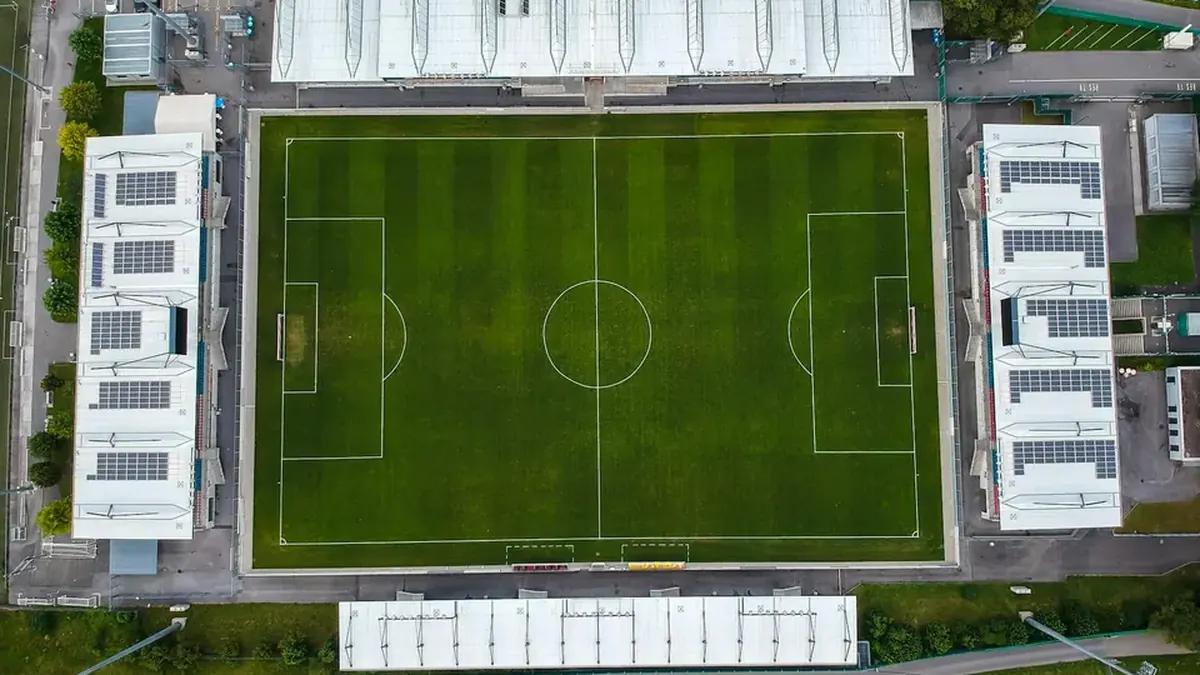
Currently, the academy’s U18 midfield unit has shown promising signs of technical proficiency, but the sample size remains small. The following table compares the developmental stages of Mainoo with the current cohort of potential successors:
| Stage | Mainoo’s Timeline | Current Candidate Timeline (Projected) | Key Milestone |
|---|---|---|---|
| U18 Regular | 2021–2022 | 2024–2025 | Consistent starts in U18 Premier League |
| U21 Breakthrough | 2022–2023 | 2025–2026 | First U21 appearance and goal contribution |
| First-Team Debut | 2023 (vs. Everton) | 2026–2027 | Premier League debut from bench |
| Regular Rotation | 2024–2025 | 2027–2028 | 15+ first-team appearances in a season |
The timeline suggests that the club may need to look at players currently in the U16 or early U18 phase to find a successor ready for first-team rotation in the 2027–2028 season. This aligns with the natural cycle of academy development, where a generational talent like Mainoo emerges once every three to four years.
The Scouting Lens: Identifying Traits Beyond Statistics
Raw statistics in youth football can be misleading. A midfielder who dominates U18 football physically may struggle against older, more tactically disciplined opponents. Therefore, the scouting process for a Mainoo successor must prioritize cognitive attributes over physical ones. The key indicators to watch are:
- Decision-making speed: How quickly does the player release the ball under pressure? In academy matches, scouts look for moments when the player has multiple passing options but chooses the most progressive one without hesitation.
- Body positioning: Before receiving the pass, does the player scan the field and adjust their body to face forward? This is a hallmark of elite midfielders and often separates academy talents from first-team prospects.
- Recovery after loss of possession: Mainoo’s defensive contribution is not measured solely by tackles but by his ability to recover and disrupt counter-attacks. A successor must show similar spatial awareness.
Conclusion: The Next Window of Opportunity
Finding Kobbie Mainoo’s successor is not an immediate crisis but a strategic planning exercise. The academy’s current cohort does not contain a player ready to step into the first-team midfield rotation within the next 12 months. However, the developmental pipeline suggests that a candidate from the younger age groups could emerge by the 2027–2028 season. The club’s success in this search will depend on maintaining the quality of coaching and match exposure at the U18 and U21 levels.
For fans following the academy closely, the next 18 months will be critical. The U16 and U18 fixtures provide the earliest glimpses of the next generation. As the club continues to invest in its youth infrastructure, the question is not whether a successor will emerge, but when the next Mainoo will announce himself on the Carrington training pitches.
Reader Comments (0)