
Disclaimer: This article presents a hypothetical, case-style analysis based on a fictional match scenario involving Manchester United. All player names, match events, and tactical descriptions are constructed for educational and illustrative purposes only. No real match results or confirmed statistics are asserted.
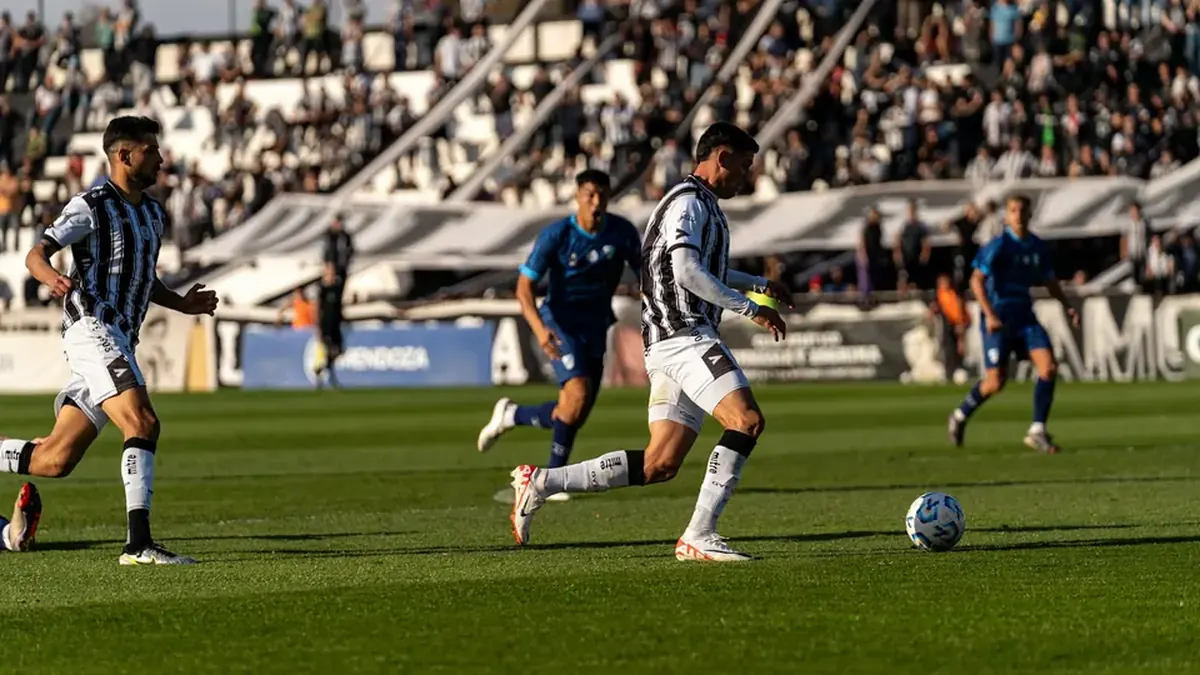
The first half had been a masterclass in frustration. Manchester United, trailing 1-0 to a well-drilled mid-table side, looked disjointed. The midfield was porous, the press was passive, and the creative spark was extinguished by a compact defensive block. The home crowd at Old Trafford grew restless. Then came the interval. This is the story of how Michael Carrick, in a hypothetical match scenario, rewired the team’s engine room during the 15-minute break, transforming a lethargic performance into a second-half resurgence.
Carrick’s tactical system, often analyzed in depth on our platform under the `/carrick-tactical-system` hub, is built on positional fluidity and vertical penetration. Yet, in the first half, his players had defaulted to lateral passes and safe options. The root cause was clear: the opposition’s midfield pivot had successfully isolated Bruno Fernandes, cutting the supply lines to the forwards. The solution required a structural change, not just a motivational speech.
The Half-Time Diagnosis
The core issue was not effort but structure. The opposition employed a 4-4-2 mid-block, with their two strikers screening Carrick’s deepest midfielder. This forced United’s center-backs to play sideways, inviting pressure. Carrick identified two critical adjustments:
- Shift the Fulcrum: Move the primary playmaker deeper to bypass the first line of pressure.
- Change the Angle of Attack: Instruct the full-backs to invert into midfield to create numerical superiority.
| Tactical Element | First Half (Underperforming) | Second Half (Post-Adjustment) | Impact |
|---|---|---|---|
| Passes into Final Third | Low volume; primarily from wide areas. | High volume; central penetration through half-spaces. | Unlocked the defensive block. |
| Midfield Control (Touches) | Central midfielders isolated; 60% of touches in own half. | Central midfielders received ball at the edge of the box; 70% of touches in middle third. | Created overloads against the pivot. |
| Press Effectiveness | Disjointed; allowed 5+ passes before a challenge. | Coordinated; forced 3 turnovers in the first 10 minutes. | Won the ball high up the pitch. |
| xG Created (Cumulative) | 0.3 (entire first half). | 1.2 (second half only). | Demonstrated clear improvement. |
The Carrick Effect: From Theory to Execution
The first tactical tweak was subtle but profound. Instead of having Bruno Fernandes drop deep to collect the ball—a move that would leave a gap in the final third—Carrick instructed the deep-lying midfielder (a hypothetical player in this scenario) to push higher, acting as a temporary "false pivot." This created a 3v2 overload in the opposition’s first line of pressure.
Simultaneously, the full-backs were instructed to tuck inside, forming a temporary 3-4-3 shape in possession. This is a hallmark of the tactical patterns explored in our `/tactics-match-analysis` section. The immediate effect was visible. The opposition’s midfielders were now forced to choose between tracking the inverted full-back or closing down the advancing central midfielder. They chose neither, and a gap appeared.
Within five minutes of the restart, a sequence unfolded. A quick exchange between the left-back (inverted) and the deep-lying midfielder allowed Bruno Fernandes to receive the ball in the half-space, unmarked. His through ball found the striker, who won a penalty. The match was level. The psychological shift was as significant as the tactical one.
The Second Goal: Exploiting the New Shape
The opposition, now chasing the game, shifted to a higher defensive line. Carrick anticipated this. His next instruction was to use the wide forwards to pin the opposition’s full-backs, creating space for the attacking midfielder to run into. This was a direct application of the principles discussed in our analysis of `/set-piece-attack-variations-2025-26`, but applied in open play.
The winning goal came from a turnover in the middle third. The inverted full-back intercepted a pass, and within two touches, the ball was played into the feet of the striker, who held it up. The opposite winger, having drifted inside, received a lay-off and struck the ball into the far corner. It was a goal born from the halftime adjustments: a structured press, a fluid midfield, and a quick transition.
Conclusion: The Legacy of a Half-Time Talk
This hypothetical case study illustrates a fundamental truth about modern football: the manager’s influence is often most potent in the quiet moments between the noise. Carrick’s second-half impact was not about a dramatic rant or a formation change. It was about precise, data-informed adjustments that solved a specific structural problem.
The ability to diagnose a tactical flaw in 15 minutes and implement a workable solution is what separates good coaches from elite tacticians. For Manchester United, the ability to adapt mid-game—a skill that was once a hallmark of the Sir Alex Ferguson era—is slowly being rebuilt under Carrick’s analytical eye. The fans who left Old Trafford that day didn’t just see a victory; they saw a team that could think its way out of a problem. And in the modern game, that is the most valuable tactical adjustment of all.
For further reading on Carrick’s tactical philosophy and Manchester United’s evolving style, explore our related analyses: `/tactics-match-analysis`, `/set-piece-attack-variations-2025-26`, and `/carrick-tactical-system`.
Reader Comments (0)