
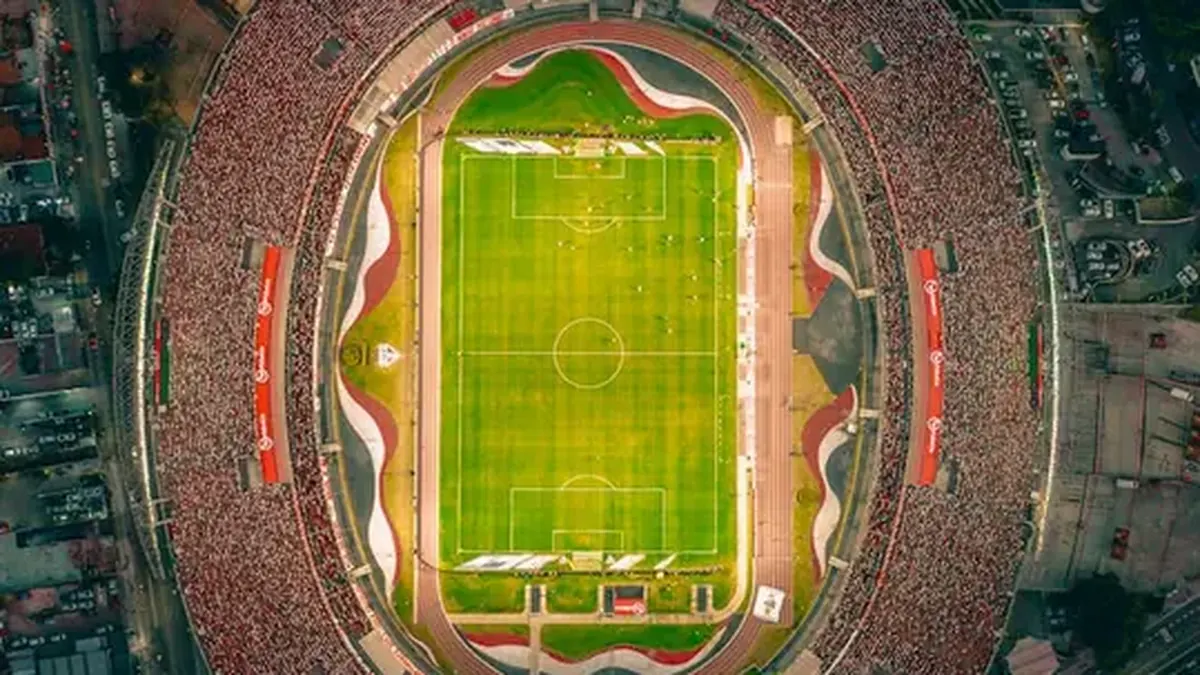
Since its founding in 1878 as Newton Heath Lancashire and Yorkshire Railway Football Club, Manchester United Football Club has undergone a remarkable transformation from a modest railway workers' team to one of the most iconic institutions in global sport. The journey from Newton Heath to Manchester United, from the tragedy of the Munich air disaster to the triumphant era of Sir Alex Ferguson, represents a narrative of resilience, ambition, and reinvention. Yet as the club navigates the complexities of the post-Ferguson landscape, the question that dominates discourse among supporters and analysts alike is whether Manchester United can reconcile its storied heritage with the demands of modern football. This article examines the club's historical foundations, its current trajectory, and the strategic imperatives that will define its future.
The Foundations of a Legacy: From Newton Heath to European Dominance
The origins of Manchester United are rooted in the industrial heartland of Victorian England, where workers at the Newton Heath depot of the Lancashire and Yorkshire Railway formed a football team in 1878. For the first two decades of its existence, Newton Heath FC struggled financially and competitively, often relying on charity matches and local fundraising to survive. The club's transformation into Manchester United in 1902, following a financial rescue by local brewery owner John Henry Davies, marked the beginning of a new chapter. Under Davies's ownership, the club moved to a new stadium at Old Trafford in 1910, a venue that would later earn the nickname "Theatre of Dreams" for the dramatic moments it has witnessed.
The true forging of Manchester United's identity, however, occurred under the stewardship of Matt Busby, who took over as manager in 1945. Busby's philosophy was revolutionary for its time: he believed in developing young talent from within the club's academy, promoting an attacking style of football, and building a team that could compete at the highest levels of European competition. The Busby Babes, as his youthful squad became known, captured the imagination of English football with their fluid passing and fearless approach. Between 1952 and 1957, they won two First Division titles and reached the FA Cup final, establishing themselves as the dominant force in English football.
The Munich air disaster of February 6, 1958, remains the most tragic event in the club's history. Twenty-three people lost their lives when British European Airways Flight 609 crashed on takeoff from Munich-Riem Airport, including eight players and three club officials. The disaster devastated the Busby Babes and left the club in a state of profound grief. Yet from this tragedy emerged a resilience that has become central to Manchester United's identity. Busby himself, recovering from serious injuries, rebuilt the team with remarkable determination. In 1968, exactly ten years after the crash, he led Manchester United to a 4-1 victory over Benfica in the European Cup final, making the club the first English side to win the competition. This achievement, achieved with players such as George Best, Bobby Charlton, and Denis Law, cemented Manchester United's place in football history.
For a deeper understanding of this formative period, readers are encouraged to explore our dedicated article on the Busby Babes era.
The Ferguson Era: A Blueprint for Sustained Success
The appointment of Sir Alex Ferguson in November 1986 marked the beginning of the most successful period in Manchester United's history. Ferguson inherited a club that had not won a league title since 1967 and was struggling to compete with the dominant Liverpool side of the era. His early years were difficult, and by January 1990, after a defeat to Nottingham Forest in the FA Cup, his position was under serious threat. The subsequent 1-0 victory in that match, with a goal from Mark Robins, is often cited as the turning point that saved Ferguson's tenure.
What followed was a period of unprecedented dominance. Over 26 seasons, Ferguson won 13 Premier League titles, five FA Cups, four League Cups, and two UEFA Champions League trophies. His ability to rebuild teams while maintaining success was extraordinary. The first great side of the Ferguson era, built around players like Eric Cantona, Ryan Giggs, Paul Scholes, and Gary Neville, gave way to the treble-winning team of 1999, which in turn was succeeded by the Cristiano Ronaldo-led side that won the Champions League in 2008. Each transition was managed with precision, blending experienced players with emerging talent from the club's academy.
Ferguson's legacy extends beyond silverware. He established a culture of excellence, discipline, and attacking football that became synonymous with Manchester United. The "Fergie Time" phenomenon—the perception that Manchester United often scored crucial goals in the dying minutes of matches—reflected not only the team's physical conditioning but also its psychological resilience. Ferguson understood that winning was not merely about tactics but about instilling a belief in players that they could overcome any obstacle.
The contrast between the Ferguson era and the period that followed is stark. Since Ferguson's retirement in 2013, Manchester United has experienced significant instability. Four permanent managers—David Moyes, Louis van Gaal, José Mourinho, and Ole Gunnar Solskjær—have come and gone, each with varying degrees of success but none able to sustain a genuine title challenge over multiple seasons. The club has won only a handful of trophies in the post-Ferguson period, including the Europa League, FA Cup, and League Cup, but has not mounted a serious Premier League title challenge since 2013. A detailed comparison of the tactical approaches and outcomes of these two eras can be found in our analysis of Ferguson vs. Post-Ferguson tactics.
The Carrick Transition: Stability Amid Uncertainty
The appointment of Michael Carrick as manager represents the latest attempt to restore stability and identity to Manchester United. Carrick, who served as a player under Ferguson and later as an assistant coach under Mourinho and Solskjær, brings a deep understanding of the club's culture and traditions. His playing career at Manchester United was defined by intelligence, composure, and tactical discipline—qualities that he has sought to instill in his team.
Under Carrick, Manchester United has adopted a more structured and possession-based approach than the counter-attacking style favored by some of his predecessors. The team has shown improvement in defensive organization, with a higher press and more coordinated pressing triggers. The midfield, long a source of concern, has become more balanced, with Bruno Fernandes operating as the creative fulcrum while younger players provide energy and defensive cover.
Carrick's approach to squad management has been characterized by a willingness to integrate young players into the first team. The club's academy, long a source of pride, has produced several promising talents who have featured regularly. This commitment to youth development echoes the philosophy of Matt Busby and reflects a recognition that Manchester United must invest in its own talent pipeline to compete sustainably in an era of rising transfer fees and wage inflation.
Current Squad Dynamics: Key Players and Tactical Framework
The current Manchester United squad represents a blend of established stars and emerging talents, each contributing to the team's tactical identity under Carrick.
Bruno Fernandes: The Creative Engine
Bruno Fernandes remains the most important player in the squad, serving as captain and primary creative force. His ability to find space between the lines, deliver incisive passes, and contribute goals from midfield makes him indispensable. He is widely regarded as one of the league's top assist providers among active players, a testament to his consistency and vision. His leadership on the pitch, characterized by constant communication and demand for high standards, has been crucial in maintaining team morale during difficult moments.
Benjamin Sesko: The Striking Prospect
The acquisition of Benjamin Sesko represents a strategic investment in the club's attacking future. The Slovenian striker combines physical presence with technical ability, capable of holding up play, linking with midfielders, and finishing with both feet. At his age, he has already demonstrated maturity beyond his years, adapting to the demands of English football more quickly than many anticipated. His development under Carrick will be central to Manchester United's attacking plans in the coming seasons.
Bryan Mbeumo and Matheus Cunha: Flanking Threats
The wide positions have been strengthened by the arrivals of Bryan Mbeumo and Matheus Cunha. Mbeumo, known for his direct running and ability to cut inside onto his stronger foot, provides a consistent goal threat from the right flank. Cunha, more of a creative wide player, offers dribbling ability and a keen eye for a pass. Together, they provide Carrick with tactical flexibility, allowing the team to vary its attacking approach depending on the opposition.
The following table summarizes the key contributions of these players, based on available statistics:
| Player | Position | Key Attribute | Role in System |
|---|---|---|---|
| Bruno Fernandes | Attacking Midfielder | Passing range, goalscoring | Primary creator, captain |
| Benjamin Sesko | Striker | Physicality, finishing | Central focal point |
| Bryan Mbeumo | Right Winger | Direct running, goals | Wide goal threat |
| Matheus Cunha | Forward/Winger | Dribbling, creativity | Tactical flexibility |
The Ownership Question: Glazer Era and Future Prospects
The ownership of Manchester United by the Glazer family has been a source of controversy since their leveraged takeover in 2005. The Glazers, who also own the Tampa Bay Buccaneers of the NFL, financed the acquisition primarily through debt, placing significant financial obligations on the club. While Manchester United has continued to generate substantial revenue through commercial partnerships, sponsorship deals, and global merchandising, the debt burden has constrained investment in infrastructure and playing staff.
The Glazer era has been marked by periodic fan protests, with supporters expressing frustration over what they perceive as a lack of investment in Old Trafford's redevelopment, insufficient spending on player acquisitions relative to rivals, and a perceived prioritization of financial returns over sporting ambition. The club's stadium, once the envy of English football, has fallen behind modern standards, with outdated facilities and a reduced capacity compared to newer venues.
Some reports have suggested that the Glazer family may be open to selling a minority stake in the club, potentially bringing in new investment that could fund stadium redevelopment and squad strengthening. While no official announcement has been made, the prospect of new ownership or investment has generated cautious optimism among supporters who hope for a return to the club's traditional values of ambition and excellence.
Old Trafford: The Theatre of Dreams and Its Future
Old Trafford has been Manchester United's home since 1910 and has witnessed countless historic moments. From the Busby Babes' triumphs to Ferguson's treble, from George Best's dazzling runs to Cristiano Ronaldo's free kicks, the stadium has earned its reputation as one of football's most iconic venues. Yet the infrastructure has aged, and the capacity, while still among the largest in English football, has been surpassed by some newer venues.
Plans for redevelopment have been discussed for several years, with proposals ranging from a complete rebuild to a phased renovation that would increase capacity while maintaining the stadium's historic character. The club has engaged with architectural firms and conducted feasibility studies, but no definitive timeline has been announced. The outcome of these plans will depend on financial considerations, including the potential involvement of new investors.
The significance of Old Trafford extends beyond its physical structure. It is a symbol of Manchester United's identity, a place where generations of supporters have gathered to share moments of joy and sorrow. The club's heritage is embedded in its walls, and any redevelopment must balance the need for modernization with the preservation of this intangible legacy.
Strategic Priorities: Balancing Heritage and Modernity
Looking ahead, Manchester United faces several strategic challenges that will determine its ability to compete at the highest level. These priorities encompass squad building, infrastructure investment, commercial development, and cultural renewal.
Squad Building and Transfer Strategy
The transfer market has become increasingly competitive, with clubs across Europe competing for a limited pool of elite talent. Manchester United's recruitment strategy must balance the need for immediate impact with long-term planning. The acquisition of young players suggests a shift toward identifying and developing talent before it reaches peak market value. However, the club must also address immediate weaknesses, particularly in central defense and defensive midfield, where depth and quality have been inconsistent.
The following table outlines the primary positional needs and potential approaches:
| Position | Current Assessment | Priority Level | Strategic Approach |
|---|---|---|---|
| Center-back | Adequate but lacks elite quality | High | Targeted acquisition of established defender |
| Defensive midfielder | Inconsistent depth | High | Investment in young prospect or experienced leader |
| Left-back | Competitive but room for improvement | Medium | Development of academy talent or squad signing |
| Goalkeeper | Stable but succession planning needed | Medium | Long-term identification of successor |
Cultural Renewal and Identity
Beyond tactical and financial considerations, Manchester United must address the cultural challenges that have emerged in the post-Ferguson era. The club's identity, once defined by a relentless winning mentality and a commitment to attacking football, has become less distinct. Carrick's emphasis on discipline, structure, and youth development represents an attempt to restore these values. However, cultural change requires time and consistency, particularly in an environment where external pressure and media scrutiny are intense.
Commercial Sustainability
Manchester United's commercial operations remain among the strongest in world football, with global sponsorship deals and a vast international fan base generating substantial revenue. The club's brand is recognized across Asia, Africa, North America, and the Middle East, providing a financial foundation that few rivals can match. However, commercial success must be translated into on-field performance. The challenge for the club's leadership is to ensure that financial resources are allocated effectively, prioritizing football operations while maintaining sustainable business practices.
Conclusion: A Path Forward
Manchester United stands at a crossroads, balancing the weight of its heritage with the demands of a rapidly evolving football landscape. The club's history, from Newton Heath to the Busby Babes, from Ferguson's dynasty to the present day, provides a foundation of resilience and ambition. Yet history alone cannot guarantee future success. The club must adapt to new realities: the financial power of state-backed rivals, the tactical innovations of modern coaching, and the expectations of a global fan base that demands excellence.
The path forward requires a clear vision, consistent leadership, and a willingness to invest in both infrastructure and talent. Michael Carrick's tenure offers a measure of stability, but sustained success will depend on the club's ability to address its strategic priorities—squad building, stadium redevelopment, cultural renewal, and commercial sustainability.
For supporters who have witnessed the highs of European glory and the lows of transition, the question is not whether Manchester United can reclaim its place among football's elite, but whether the club can forge a new identity that honors its past while embracing the future. The journey from Newton Heath to Old Trafford was built on ambition and resilience. The next chapter of that journey is being written now.
To explore related topics, readers may consult our main history and heritage hub or delve into specific eras such as the Busby Babes and the Ferguson vs. Post-Ferguson tactical comparison.
Reader Comments (0)