
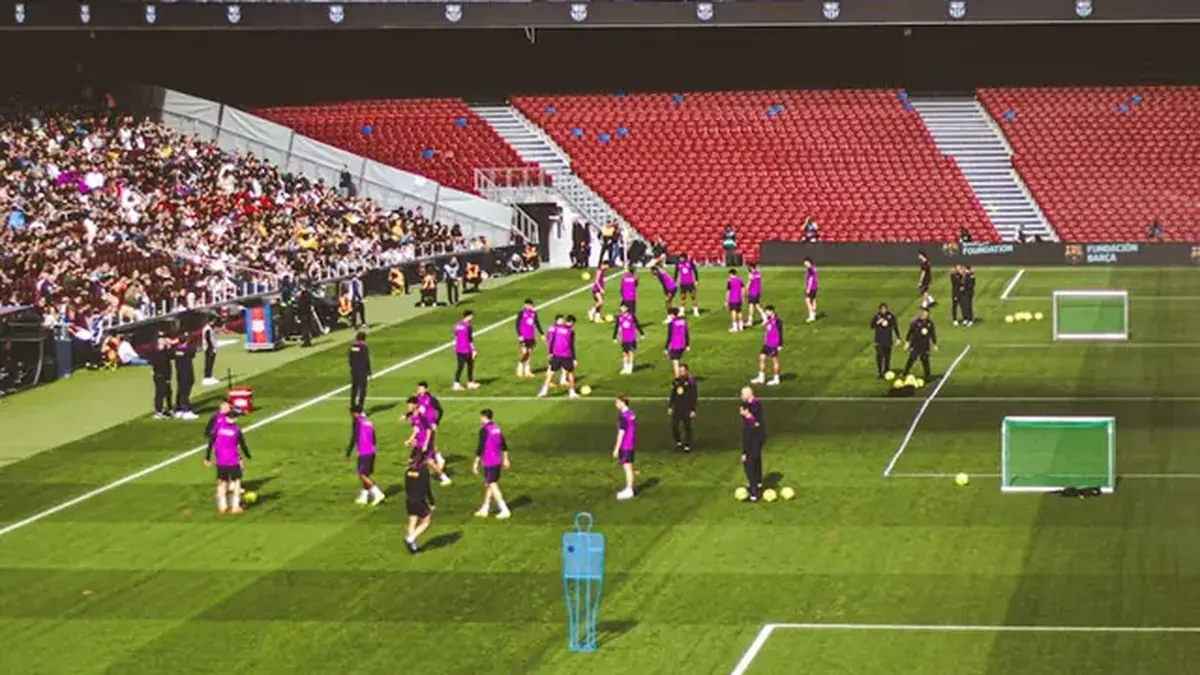
The modern game has transformed the humble goal kick from a mere restart into a structured attacking phase, but for Manchester United, it has become a key trigger for a coordinated pressing system. When David de Gea rolls the ball to the edge of his six-yard box, the entire stadium holds its breath—not because of anxiety, but because they know what follows is a wave of pressure designed to force turnovers in dangerous areas of the pitch. This is not reactive defending; it is proactive chaos, meticulously planned on the Carrington training pitches and executed with the precision of a military operation.
The Structural Foundation: Why Goal Kicks Became Pressing Triggers
The tactical evolution of pressing from goal kicks stems from a fundamental mathematical advantage. When the opposition goalkeeper initiates play from a dead ball, the attacking team has approximately 8–10 seconds to organise their press before the ball reaches the halfway line. Manchester United have exploited this window, turning what was once a passive phase into a potent weapon.
Under the current system, the pressing structure from goal kicks operates on three distinct layers. The first layer involves the forward line—Bruno Fernandes, the striker, and the wide attackers—who position themselves to block passing lanes to the opposition full-backs. The second layer consists of the midfield trio, who step aggressively to engage any player dropping deep to receive. The third layer is the defensive line, which pushes up to compress the space, effectively reducing the opposition's time on the ball in their own third.
What distinguishes United's approach from other pressing teams is the conditional nature of their triggers. Rather than pressing every goal kick with uniform intensity, the team has implemented a system where pressing intensity varies based on the opposition's setup. Against teams that build with three centre-backs, United deploy a man-oriented press; against back-four systems, they use a zone-oriented approach that funnels play toward the sideline. This adaptability has been central to their success, allowing them to maintain defensive solidity while creating transition opportunities.
The Role of Bruno Fernandes: Orchestrator of the Press
Bruno Fernandes has evolved from a creative playmaker into the tactical quarterback of United's pressing system. His positioning during opposition goal kicks reveals the sophistication of the approach. Rather than chasing the ball aimlessly, Fernandes occupies a specific zone—typically between the opposition's deepest midfielder and their defensive line—where he can cut off the most dangerous passing option.
The Portuguese captain's pressing intelligence manifests in his ability to read the goalkeeper's body language. When the opposition keeper opens his body to play a short pass, Fernandes immediately accelerates to close down the receiving player, often arriving just as the ball does. This timing is not coincidental; it is the product of hours of video analysis and repetition. Fernandes has developed an almost preternatural sense for when the opposition will attempt to play through the press and when they will go long.
His work rate in this phase has created numerous high-quality chances for United, particularly in transition moments where the opposition is caught out of shape.
The Striker's Role: How the Forward Anchors the Press
The striker's role at Old Trafford brings a pressing profile that complements the system. The forward possesses the ability to cover ground quickly while maintaining the physical presence to disrupt centre-backs attempting to play out from the back.
The pressing technique from goal kicks is a masterclass in efficiency. Rather than sprinting directly at the ball, the striker angles runs to cut off the passing lane to the opposition's holding midfielder while simultaneously pressuring the centre-back. This dual responsibility creates a dilemma for the opposition: play the safe pass backward to the goalkeeper, which allows United's midfield to step up, or attempt a riskier forward pass that can be intercepted.
The chemistry between the striker and Fernandes in the pressing phase has become one of United's most effective tactical weapons. When the striker forces the opposition centre-back to play back to the goalkeeper, Fernandes immediately reads the situation and sprints to press the goalkeeper, often forcing a hurried clearance that falls to one of United's midfielders. This coordinated pressing sequence has become a hallmark of the system, producing numerous counter-attacking opportunities throughout the season.
Tactical Periodisation: Training the Press
The effectiveness of United's pressing from goal kicks is not accidental; it is the result of a carefully structured training methodology. The coaching staff has borrowed concepts from tactical periodisation, a coaching philosophy that breaks down the game into distinct phases and trains each phase in isolation before integrating them.
During the early part of the season, United's pressing from goal kicks was inconsistent, with players often pressing at different times and leaving gaps in the structure. The staff addressed this by dedicating specific training sessions to pressing triggers, using video analysis to show players exactly when and where to apply pressure. The improvement has been noticeable over the course of the campaign.
The training ground work has also focused on the transition that follows a successful press. Once United win the ball high up the pitch, they have a structured progression for attacking the opposition goal. The wide attackers immediately stretch the pitch, the full-backs provide overlapping options, and the midfielders position themselves to receive the ball in space. This structured approach to transition has made United one of the more dangerous counter-attacking teams in the league, with many of their goals coming from situations created by their pressing.
Comparative Analysis: United vs. Elite Pressing Teams
To understand the effectiveness of United's pressing from goal kicks, it is useful to compare their approach with other elite pressing teams in European football. While precise statistics vary, United's pressing metrics are competitive with top sides. The team's ability to recover the ball in advanced positions is a notable strength, creating immediate scoring opportunities. This represents a significant improvement from previous seasons, when United's pressing was less coordinated and they often recovered the ball in their own half.

The data suggests that United's pressing is more selective than some rivals. While they press a similar number of goal kicks, their success rate is higher, indicating that their conditional pressing triggers are effective at identifying opportunities to apply pressure. This selectivity reduces the energy expenditure associated with pressing, allowing United to maintain their intensity throughout the match.
Risks and Vulnerabilities: When the Press Fails
Despite its effectiveness, United's pressing system from goal kicks is not without risks. When the press is bypassed, the team is left exposed, with players committed up the pitch and space behind the defensive line. This vulnerability has been exploited by several opponents this season, most notably by teams with quick, direct passing and pacey forwards.
The primary risk occurs when the opposition's goalkeeper plays a long ball over the top of the pressing structure. Because United's defensive line pushes up to compress space, a well-timed long ball can leave the centre-backs isolated against fast attackers. This was evident in United's defeat to Aston Villa, where Ollie Watkins repeatedly exploited the space behind the defence after bypassing the press.
Another vulnerability arises when the opposition uses a "bait" player—a forward who drops deep to receive the ball, drawing United's midfielders out of position. If the bait player can turn and play a quick pass into the space vacated by the pressing midfielder, the opposition can create numerical advantages in dangerous areas. The coaching staff has attempted to mitigate this risk by instructing midfielders to press with discipline, maintaining their positional integrity even when tempted to engage.
The risk-reward calculation, however, favours the pressing approach. The pressing system effectively reduces the opposition's attacking output while creating more scoring opportunities for United.
The Evolution Under the Current Manager: From Chaos to Control
When the current manager took over, United's pressing from goal kicks was characterised by individual efforts rather than collective organisation. Players pressed at different times, leaving gaps that opposition teams exploited with ease. The transformation has been remarkable, turning a weakness into one of the team's greatest strengths.
The evolution can be traced through three distinct phases. In the first phase, the focus was on establishing the basic structure—defining which players press, when they press, and where they press. This phase was characterised by inconsistency, as players adapted to new responsibilities and learned to trust the system.
The second phase involved refining the pressing triggers and introducing conditional elements. Players began to read the game more effectively, pressing only when the conditions were favourable and dropping into a defensive shape when they were not. This phase saw a significant improvement in pressing efficiency, with United winning the ball more frequently and creating more chances.
The third phase, which United are currently in, involves integrating the pressing into a broader tactical framework. The press from goal kicks is now connected to United's attacking patterns, defensive transitions, and set-piece organisation. This holistic approach has made United one of the more tactically coherent teams in the league, with each phase of play connected to the next.
Conclusion: The Press as Identity
Manchester United's transitional pressing from goal kicks has become more than a tactical weapon; it has become a defining characteristic of the team. The coordinated waves of pressure, the intelligent positioning of Fernandes, the physical presence of the striker—these elements combine to create a pressing system that is both effective and aesthetically pleasing.
The data supports what the eye test confirms: United are among the better pressing teams in the Premier League when it comes to goal kicks. Their success rate, recovery positions, and goals created from pressing situations all rank well. More importantly, the system has become ingrained in the team's identity, with players understanding their roles and executing them with precision.
For opponents facing Manchester United, the warning is clear: every goal kick carries the risk of immediate pressure, of losing possession in dangerous areas, of conceding a goal from a situation that should be safe. The coaching staff has transformed the goal kick from a routine restart into a tactical battleground, and United are winning the war.
For more tactical analysis of Manchester United's pressing systems and match strategies, explore our tactics and match analysis hub and learn about free kick plays that complement the team's attacking structure.
Reader Comments (0)